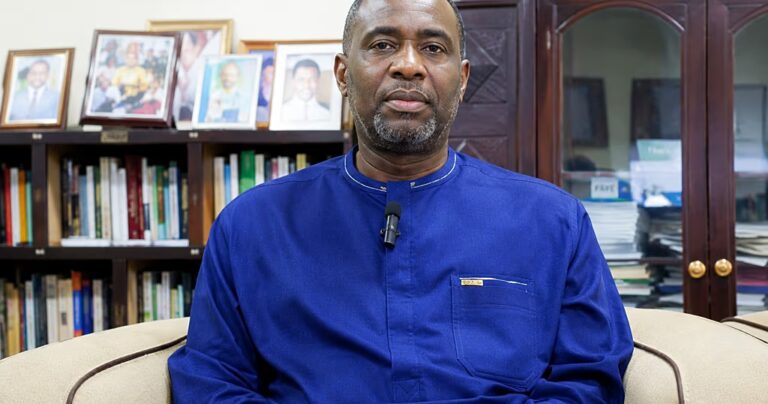
Adewole Adebayo, the presidential candidate of Nigeria’s Social Democratic Party (SDP), declared that President Bola Tinubu has “defeated himself” in an interview on Sunday Politics, a program broadcast by Channels Television. The remarks were made ahead of the 2027 general election, a period of heightened political scrutiny as parties prepare to contest the country’s highest office.
In the interview, Adebayo said Tinubu’s administration is “outgoing,” noting that it is merely waiting to complete its four‑year term. He argued that the government has failed to address the nation’s most pressing problems—poverty, insecurity and governance challenges—thereby undermining the very purpose of government. “With all these insecurity, hunger and bad Economy, President Tinubu has already defeated himself. His administration is outgoing,” Adebayo said.
The SDP candidate urged Nigerians to focus on national issues rather than individual political personalities as the campaign season gathers momentum. He stressed that his priority is to unite Nigerians, not simply to form an opposition coalition. “The outcome of the 2027 election will ultimately depend on voter participation and confidence in the electoral process,” he added.
Adebayo’s comments come at a time when the country’s political landscape is increasingly polarized. The SDP, founded in 1998, has positioned itself as a centrist alternative to the dominant parties. Adebayo, a former civil servant and former Minister of State for Finance, has campaigned on a platform of economic reform and social justice. His critique of Tinubu’s administration reflects a broader debate about the effectiveness of the current government’s policies.
The remarks also highlight the persistent challenges that Nigeria faces. Poverty remains widespread, with a significant portion of the population living below the national poverty line. Insecurity, driven by insurgency, banditry and communal clashes, continues to disrupt economic activity and displace communities. Governance issues, including corruption and bureaucratic inefficiency, have been cited by civil society groups as impediments to development.
By calling for unity and emphasizing the importance of voter participation, Adebayo is appealing to a citizenry that has grown weary of political rhetoric. His message suggests that the 2027 election will be a test of the electorate’s willingness to engage in the democratic process and to hold leaders accountable.
As the election approaches, the SDP’s stance and Adebayo’s critique of Tinubu’s record will likely influence public discourse. Observers will watch how voters respond to calls for unity and accountability, and whether the electorate’s engagement translates into a decisive outcome at the polls. The coming months will reveal whether the nation’s political climate shifts toward a more inclusive and participatory democracy, or whether entrenched divisions continue to dominate the electoral arena.