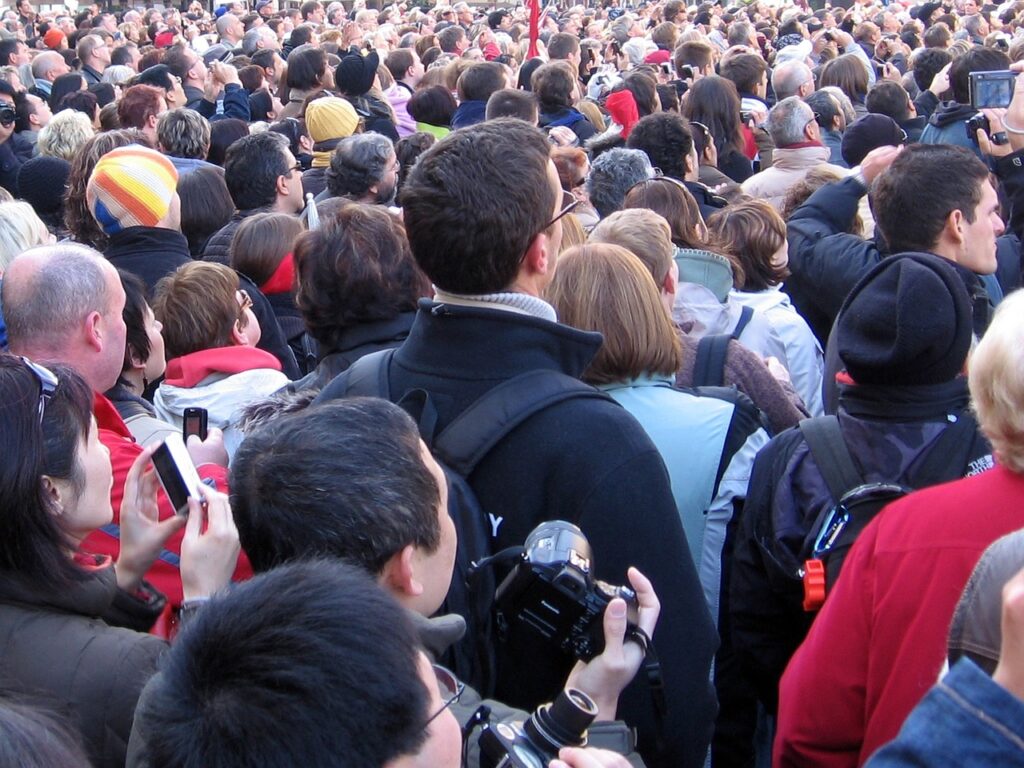
There’s a quiet mathematics running through every forest, lake, and fjord—a set of invisible rules that decides who thrives, who fades, and who survives the next harsh season. Population ecology is the science of those rules, a discipline that stitches together raw data and living breath, revealing the patterns behind the pulse of life.
At its heart, this field asks a deceptively simple question: how do living things respond when their world shifts beneath them? When food becomes scarce, when a new predator moves in, when disease sweeps through, or when the climate turns hostile—populations don’t just suffer or flourish randomly. They react in predictable, often elegant ways. Scientists capture these reactions in mathematical models, turning messy reality into clean equations that can forecast what comes next. Those forecasts aren’t just academic exercises; they guide real decisions about which species to protect, which habitats to restore, and how to stop an outbreak before it spirals out of control.
One of the most powerful ideas in this field is carrying capacity—the natural ceiling on how many individuals a given environment can support over the long haul. Picture a herd of deer in a valley with a finite amount of grass. At first, the herd grows quickly, almost effortlessly. But as the deer approach the valley’s limit, growth slows, then stalls. This isn’t a failure; it’s a balancing act. The logistic growth equation, which looks deceptively simple on paper, captures this dance between explosive potential and hard limits, reminding us that no population can outrun the constraints of its home.
But carrying capacity is only part of the story. Predators, rivals, and pathogens all throw their weight into the mix. A wolf pack can send a prey population into a dizzying cycle of boom and bust, while two species fighting for the same meal often find ways to carve out separate lives—a process called niche partitioning. It’s nature’s version of a crowded city where different groups learn to live on different floors, avoiding constant collision.
The practical stakes are enormous. Conservationists use these principles to decide when to intervene, whether that means culling invasive species that throw ecosystems off balance or tracking how a virus moves through a human community. Public health officials rely on the same logic to predict outbreaks and design containment strategies. In every case, the underlying math offers a flashlight in a dark, complicated world.
I’ve walked through lake districts and fjords where this balance plays out in full color. I’ve watched apes move through the canopy with a quiet authority and seen squirrels dart through underbrush, each one a tiny actor in a vast, interconnected drama. No species exists in isolation. Every birth, every death, every migration sends ripples through the whole system.
What strikes me most is how fragile this web is. Remove one thread—a keystone species, a critical food source—and the entire fabric can unravel. That’s why conservation isn’t just about saving individual animals; it’s about preserving the relationships that keep whole ecosystems alive. Sustainable practices, careful management, and a willingness to listen to what the data tells us are all part of the same commitment.
In the end, population ecology isn’t really about numbers. It’s about the stories those numbers tell—stories of struggle, adaptation, and resilience. And if we pay attention, those stories teach us something vital: that we are part of this web, not above it. The more we understand the delicate balance that sustains us all, the better equipped we are to protect it. That’s a lesson worth carrying into every decision we make about the natural world.