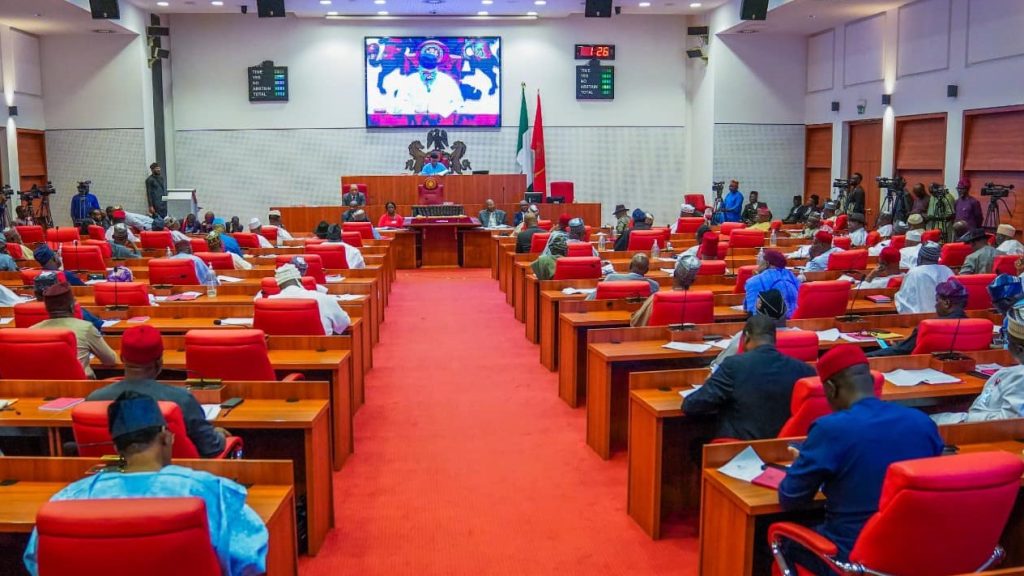
The Senate has clarified that the Federal Capital Territory will not be included in the proposed state police framework, citing the absence of constitutional institutions required to operate an independent police force.
Senator Yemi Adaramodu, chairman of the Senate Committee on Media and Publicity, explained that Abuja lacks both a governor and a state house of assembly. Unlike Nigeria’s 36 states, the territory is administered directly by the federal government through a minister who operates under the authority of the Federal Executive Council. Legislative functions for the FCT are performed by the National Assembly.
“Since Abuja does not have a governor or state legislature, it cannot adopt the same policing model being designed for the states,” Adaramodu said in a statement. “The federal capital does not have an assembly. The National Assembly is the body that makes laws for the Federal Capital Territory. That is why it has to align with federal arrangements, so the federal police remain responsible.”
The clarification comes as the federal government advances plans to establish a state police system across the country. President Bola Tinubu is expected to receive the draft Executive National Policing Bill shortly, marking a key step in the legislative process.
The proposed legislation aims to decentralise policing powers, allowing states to form and manage their own police services. However, the FCT’s unique constitutional status — as a federal entity without elected executive or legislative leadership at the subnational level — places it outside this structure.
Legal experts have noted that any extension of state policing to the territory would require constitutional amendment, given that Section 299 of the 1999 Constitution designates the FCT as a federal capital administered by the president through a minister.
As the bill moves toward the National Assembly for debate, stakeholders are watching closely for how the framework will address coordination between federal and state forces, funding mechanisms, and oversight safeguards. The exclusion of the FCT underscores the complexity of restructuring Nigeria’s security architecture within existing constitutional boundaries.