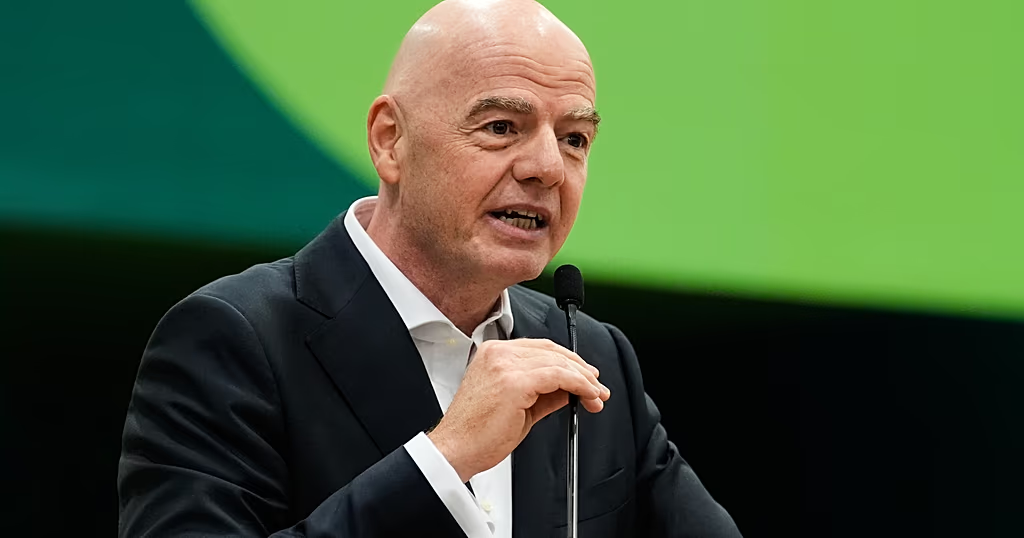
FIFA has mounted a forceful defence of President Gianni Infantino, rejecting what it describes as a coordinated campaign to destabilise his leadership. The governing body’s statement on Saturday came hours after European football’s governing body, UEFA, confirmed a departure payment made to a woman during Infantino’s 16-year tenure as its secretary general.
UEFA said the payment complied with staff regulations in place at the time, noting that rules were updated in 2016 to align with standards expected of a modern, high-profile organisation. The confirmation followed a report by the Daily Telegraph alleging the woman received a six-figure sum after an alleged relationship with Infantino more than a decade ago. A FIFA spokesperson told the newspaper that Infantino “strongly denies these allegations, and they are categorically untrue.”
In its broader response, FIFA argued that critics lacking support among its member associations were resorting to “allegation, insinuation or misinformation” rather than pursuing change through established democratic processes. While welcoming “legitimate scrutiny,” the organisation warned that such examination must not become “a licence to distort facts, amplify unsubstantiated allegations or manufacture distractions designed to undermine progress.”
The controversy compounds existing pressure on Infantino. He recently abandoned a plan to sell commercial stakes in the World Cup to private investors after UEFA, CONCACAF and the Asian Football Confederation rejected the proposal. Though FIFA’s management board backed Infantino at a meeting in Morocco this week and he apologised for the process, calls for his resignation have grown.
UEFA escalated the standoff on Thursday, reiterating a threat to boycott FIFA tournaments and stating it had “lost confidence in Gianni Infantino’s presidency.” The European body said its conditions for returning to FIFA competitions remained unmet.
Infantino is seeking re-election for a fourth and final term at FIFA’s congress in March. The mounting friction between Zurich and Europe’s most powerful football institution suggests the campaign period will be defined by institutional conflict as much as by policy debate.