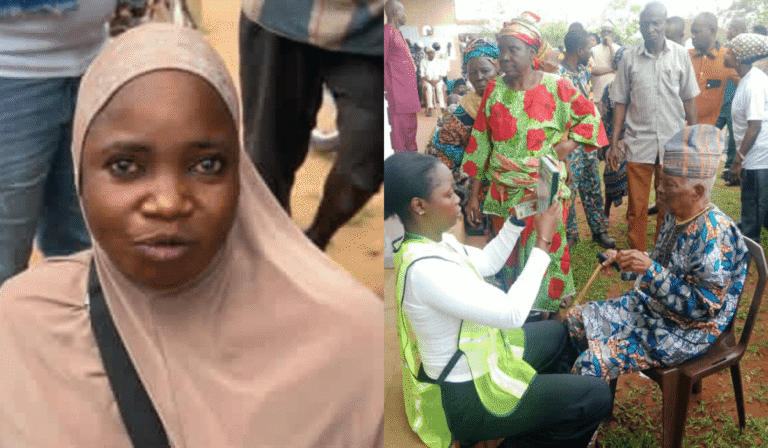
A 55-year-old voter in Osun State was unable to complete accreditation for the governorship election after repeated failures of the Bimodal Voter Accreditation System at his polling unit, raising concerns about technical reliability in the ongoing exercise.
Sharafa Lasisi, who votes at Alamisi Unit 6, said he made multiple attempts to complete the facial verification process but was blocked each time by what election officials described as network-related challenges. “My name is Sharafa Lasisi. I am from Alamisi Unit 6. I am 55 years old. I have been to where they are supposed to verify my face, but they said the network isn’t letting the verification go through,” he said.
Officials initially advised him to leave and return later when the issue was expected to be resolved. Lasisi complied but found the problem unchanged upon his return. “They said I should go and eat at home. I went and came back and it still didn’t go through,” he added.
Lasisi has appealed to the Independent National Electoral Commission to intervene promptly so he can exercise his constitutional right to vote. “I want them to help me so I will be able to cast my vote also,” he said.
The incident highlights persistent technical and connectivity challenges affecting voter accreditation at some polling units in the Osun governorship election. BVAS, introduced to strengthen electoral integrity through biometric verification, depends on stable internet access to authenticate voters in real time. When network signals fail, the system cannot complete facial or fingerprint matching, leaving eligible voters stranded.
Election observers have previously warned that infrastructure gaps, particularly in rural and semi-urban areas, could undermine the technology’s effectiveness. The commission has not yet issued a public response to the specific case at Alamisi Unit 6, but INEC officials at various levels have acknowledged intermittent connectivity issues during the election and said contingency measures are in place.
Lasisi’s experience reflects a broader pattern reported across several states in recent Elections, where voters have been turned away or delayed due to device failures, power shortages, or poor network coverage. Civil society groups have called for improved offline capabilities in future deployments and better polling unit-level technical support.
As voting continues, the commission faces pressure to resolve accreditation bottlenecks swiftly to prevent disenfranchisement and maintain public confidence in the electoral process.