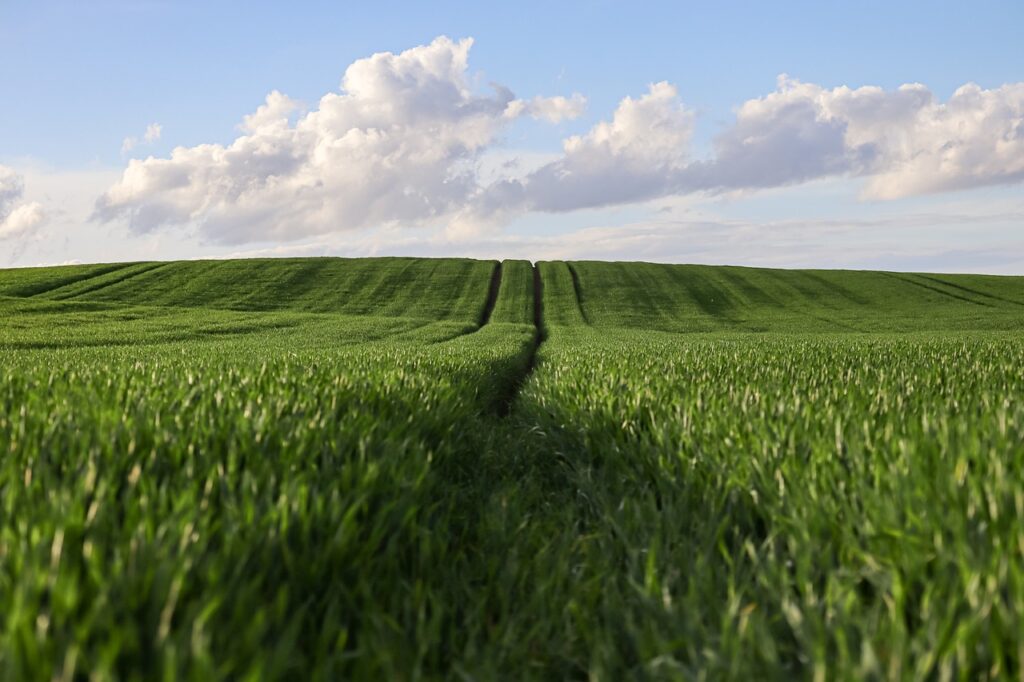
There is a quiet, relentless dance happening on every farm, in every market, and across every supply chain that brings food to your table. It is not just about planting seeds or harvesting crops. It is about the delicate, often invisible balance between what the earth can give and what humanity demands. Agricultural economics is the study of that balance, and it is far more fascinating than the dry numbers and policy papers might suggest.
Take something as simple as crop rotation. Farmers have known for generations that planting the same crop in the same soil year after year is a recipe for disaster. By alternating crops, they keep the soil rich, reduce the spread of pests, and cut down on the need for chemical fertilizers. The results are not just anecdotal. Research published in the Journal of Agricultural Economics shows that this age-old practice can boost yields by as much as 20 percent while slashing fertilizer use by 15 percent. That is not just a win for the farmer’s wallet; it is a win for the planet.
But the economics of agriculture is not confined to the farm gate. It is deeply rooted in the land itself. The soil beneath our feet, with its layers of sediment, its hidden water tables, and its occasional sinkholes, is a living archive of environmental history. Understanding these natural systems is essential to understanding how we can produce food sustainably. As old traditions are challenged by new realities, the ground is shifting, quite literally, to reveal fresh opportunities for innovation.
Biodiversity also plays a starring role in this story. The humble bandicoot, the gentle manatee, the clever raven, the watchful guinea fowl, and the cheerful canary all contribute to the ecological web that keeps agriculture resilient. A farm that supports a wide range of life is a farm that can better withstand shocks, whether from disease, drought, or market swings. The economics of food is inseparable from the health of the ecosystems that sustain it.
Technology is rewriting the rules as well. Precision agriculture, which uses everything from satellite imagery to soil sensors, is allowing farmers to apply inputs like water, fertilizer, and even trace elements such as curium and magnesium with surgical precision. This reduces waste, cuts costs, and boosts productivity. The image of endless golden fields under a bright blue sky is being updated with data-driven tools that make every acre count.
Water, of course, is the lifeblood of it all. The sound of rushing water, whether a gentle stream or a powerful river, is a reminder that responsible water management is not a luxury but a necessity. In many parts of the world, water scarcity is already shaping what can be grown and at what price. The economics of agriculture is, in many ways, the economics of water.
If you listen closely, there is a rhythm to the market that feels almost poetic. The rise and fall of prices, the changing of seasons, and the logic of human choice all move in a cadence that is both predictable and surprising. The language of agricultural economics is made of numbers, but the stories behind those numbers are what give them meaning.
At its core, the discipline is about finding the point of equilibrium, the moment where supply meets demand and the system holds steady. That balance is not a static point but a moving target, constantly adjusted by climate, technology, policy, and human behavior. It is where ingenuity meets nature, and where economic principles are tested against the realities of the land.
Agricultural economics is not a dusty academic niche. It is a living, breathing field that shapes the cost of your groceries, the health of your community, and the future of the planet. It asks hard questions about how we feed a growing population without exhausting the resources we depend on. And it offers a path forward, one that requires curiosity, creativity, and a profound respect for the natural world. The secrets of this field are not locked away in spreadsheets. They are waiting to be discovered in the fields, the markets, and the choices we make every single day.