At 74, I’ve traded my agricultural research notebooks for a fascination with rocks that fall from the sky. Living in Mali, where the Sahel stretches endlessly under a star-filled canopy, I’ve learned that the same patience required to grow crops applies to understanding the cosmos. My years as a call center agent taught me to listen, and my public relations work taught me to translate complex ideas into plain talk. Now, I’m turning that lens toward meteorites—those silent travelers that crash into our world carrying messages from the birth of the solar system.
Think of a meteorite as a cosmic fossil. It begins as a chunk of an asteroid, a planet, or even a comet, broken loose by a violent collision millions or billions of years ago. After drifting through the void, it enters Earth’s atmosphere, where friction turns its surface into a fiery streak before it lands, often in pieces. But what survives is precious. Some meteorites carry grains of stardust that predate our Sun, offering a direct peek into the nursery of our solar system. Others hold amino acids—the molecular building blocks of life—suggesting that the ingredients for biology may have hitched a ride from space to Earth.
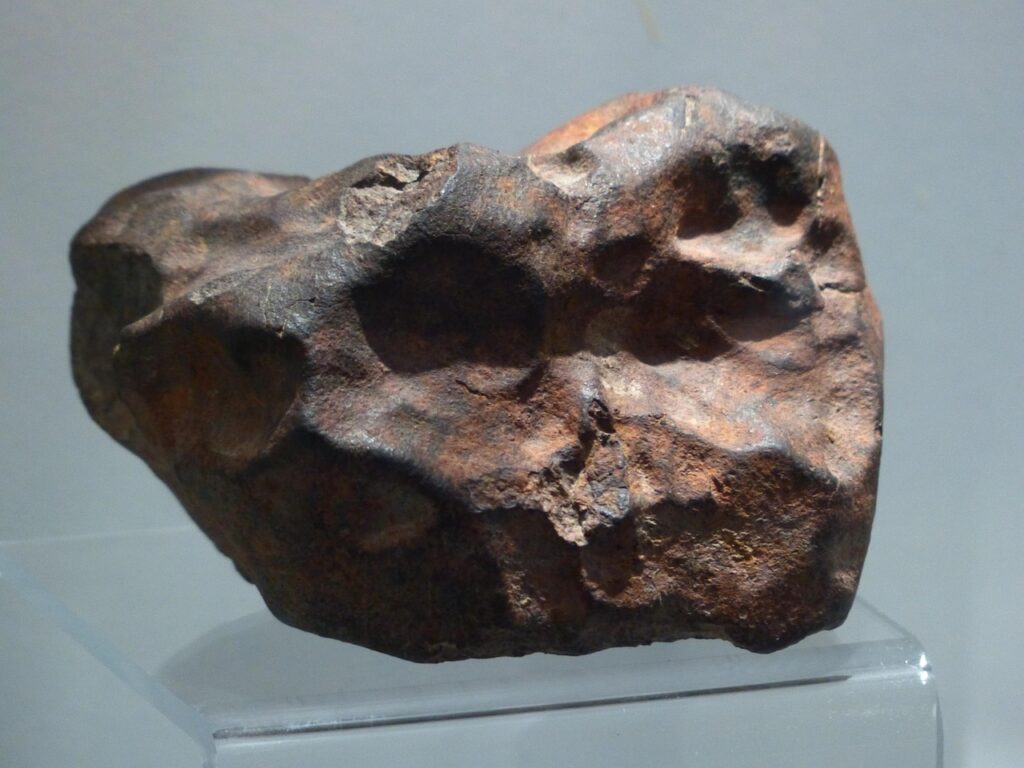
Not all meteorites are alike. The most common are stony ones, packed with silicate minerals that look like gray concrete but hold a universe of information. Then there are the iron meteorites, dense and metallic, remnants of ancient planetary cores that shattered long ago. And the rare stony-irons, a beautiful mix of both, are like cosmic fruitcake—part rock, part metal, entirely fascinating. Each type tells a different story, and scientists use tools like spectroscopy and microscopy to read them, peeling back layers of mineral structure to uncover when and how these rocks formed.
The methods are as varied as the meteorites themselves. Some researchers rely on non-destructive X-ray CT scans, peering inside a meteorite without harming a single crystal. Others take a more direct approach, drilling tiny samples to analyze chemical signatures. By mapping texture, mineralogy, and elemental composition, they can trace a meteorite’s journey—where it came from, how old it is, and what conditions shaped it. For example, a simple Python script can classify meteorites by their iron-to-silicate ratio, letting researchers compare hundreds of samples at once. It’s a small step of code that opens a wide window into the past.
What does this all mean for us? Meteorite research is more than a niche academic pursuit. It’s a time machine. It helps us understand how planets form, why Earth became habitable, and whether life might exist elsewhere. Every fragment we study is a piece of a puzzle that started billions of years ago. As we continue to collect these rocks from deserts, ice fields, and museum drawers, we’re not just cataloging debris—we’re reading the earliest chapters of our own story.
So whether you’re a seasoned astronomer or just someone who looks up at night with wonder, remember this: the next time you hear about a meteorite landing, it’s not just a rock. It’s a letter from the beginning of everything, and we’re only just learning how to read it.