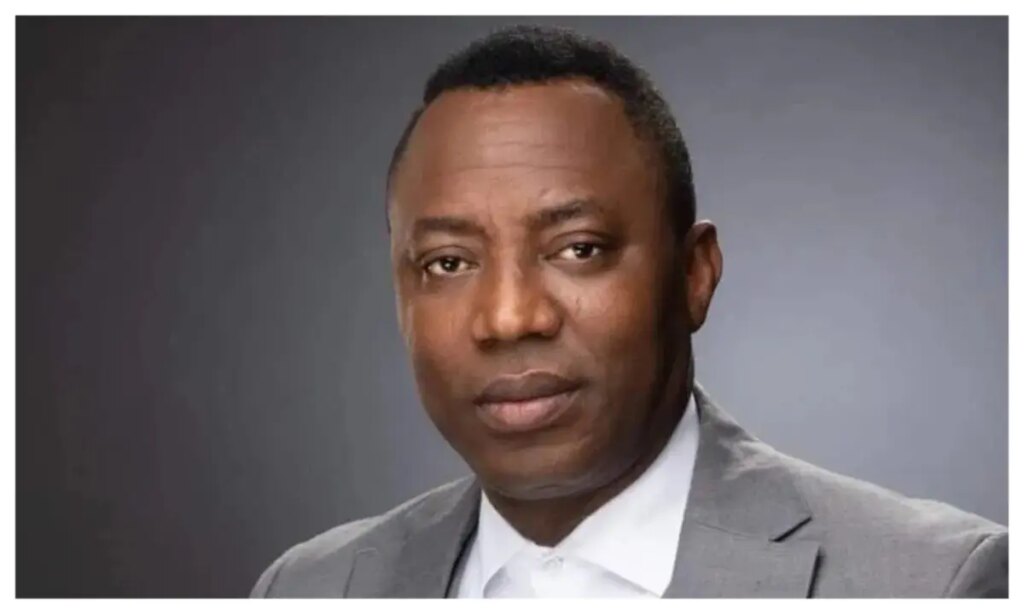
African Action Congress presidential candidate Omoyele Sowore has criticized the Department of State Services for what he described as discriminatory treatment at a National Peace Committee peace accord signing event. The human rights activist and publisher detailed the incident in a series of posts on his verified X account, describing a pattern of intimidation and class-based discrimination by Nigerian security agencies.
Sowore said he arrived at the venue only to be stopped at the gate by DSS operatives who demanded to see his invitation letter, despite one officer acknowledging he knew Sowore was a presidential candidate. While the delay continued, another presidential candidate arrived with a long convoy and was immediately ushered in without similar scrutiny.
Additional restrictions followed. Security personnel initially said Sowore’s staff would not be permitted entry, then extended the exclusion to his camera crew. He refused to comply, insisting that all presidential candidates deserve equal dignity at an event designed to promote peaceful Elections.
“If this is supposed to be a peace accord involving presidential candidates, then every candidate must be treated with equal dignity and respect,” Sowore wrote. “Not according to the size of their convoy, the number of security vehicles around them, or how much privilege they display.”
The incident highlights longstanding concerns about how Nigerian security forces interact with political figures outside the mainstream establishment. Critics argue that protocol often favors candidates with visible state backing or large security details, while opposition figures face arbitrary barriers.
Sowore, who founded the online news platform Sahara Reporters, has contested the presidency in previous election cycles. His confrontation with the DSS adds to a history of friction between the agency and opposition politicians, journalists, and activists.
The National Peace Committee, chaired by former Head of State General Abdulsalami Abubakar, organizes peace accords ahead of general elections to commit candidates to non-violence and acceptance of results. The effectiveness of such accords depends partly on the perception of fairness in their administration.
Neither the DSS nor the National Peace Committee had issued a public response at the time of reporting. The episode is likely to fuel debate about institutional neutrality and the treatment of opposition candidates in Nigeria’s electoral process.