

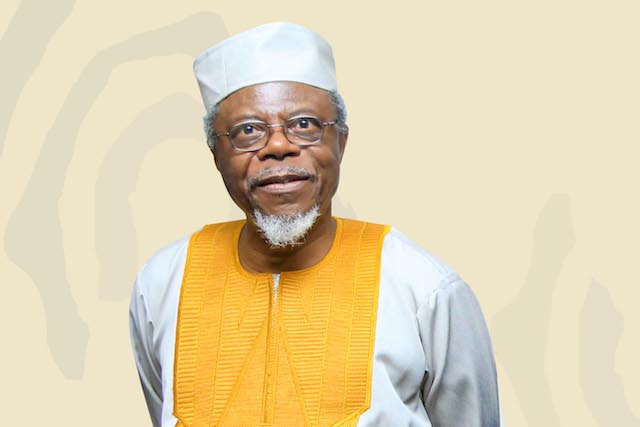
Veteran Nollywood actor Dele Odule sat down with Ebenezer Bajela to discuss his passion for table tennis, his love for the Super Eagles, and more. When asked how he relaxes when he isn’t on set, Odule explained that he is an avid table‑tennis player. “I’m not a professional, but I know the game well, and people who see me play can tell I’m good at it,” he said. Although he does not consider himself a football fan, his background in teacher training gave him a solid understanding of the sport, as Physical and Health Education was a compulsory subject. Nonetheless, table tennis remains his favorite sport.
Odule also recalled his involvement in volleyball, which he played for Ogun State in the early 1980s. “I started playing volleyball while at teacher’s college and reached the state level,” he noted. While volleyball was the only sport he pursued seriously in his youth, he still enjoys playing table tennis from time to time.
Many readers will remember Odule’s table‑tennis skills showcased in the film *Ti Oluwa N’ile*, where he portrayed a king. When asked why he didn’t turn that talent into a career, he replied, “I couldn’t do both at once. I chose theatre, and I’m comfortable with that.” He began acting before attending teacher training and continued to develop his love for sports during college, where participation in Physical and Health Education was mandatory. Odule never entered formal competitions; he played purely for enjoyment.
Regarding the best Nigerian table‑tennis players, Odule mentioned Waheed Ekun, an elder statesman of the game, and a player named Musa from Benue, whose full name escapes him. For women’s table tennis, he praised Kehinde Okenla of Ogun State and highlighted Aruna Quadri, whose recent achievements have made the country proud. Odule’s own interest in the sport began in childhood, when makeshift benches served as tables. As he improved, he gained access to better facilities, though he now lacks a permanent table‑tennis kit at home because theatre occupies most of his time. He still joins games whenever he visits friends or sees a table nearby.
When questioned about his football fandom, Odule clarified that, although he is not a die‑hard fan, he does watch the Super Eagles whenever they play. “It’s like asking me if I’m interested when Yoruba culture is on display—I watch the Eagles because I love my country,” he said. He expressed deep patriotism, stating he would never relocate abroad. Odule noted that Nigeria’s recent drop to 40th in the FIFA rankings reflects an over‑reliance on overseas‑based players who may not give their best. He believes home‑based players, driven by national pride, would perform better, recalling the era of Mudashiru Lawal and Segun Odegbami when local talent shone.
On nurturing future talent, Odule advocated for making sports a compulsory part of the school curriculum. He recalled intercollegiate competitions during his teacher‑training days, which helped discover top athletes, and lamented the scarcity of such events in secondary schools today. He argued that every student should participate in at least one sport and earn a certificate, thereby uncovering hidden abilities.
Addressing comments about aging and reduced activity, Odule acknowledged that age limits physical pursuits. “Even our profession is an exercise in itself—changing costumes, bending, standing—so acting and sports share common demands,” he observed. He concluded that while old age may curb sports participation, the discipline and effort required in acting keep him active.



Comments are closed for this story.