
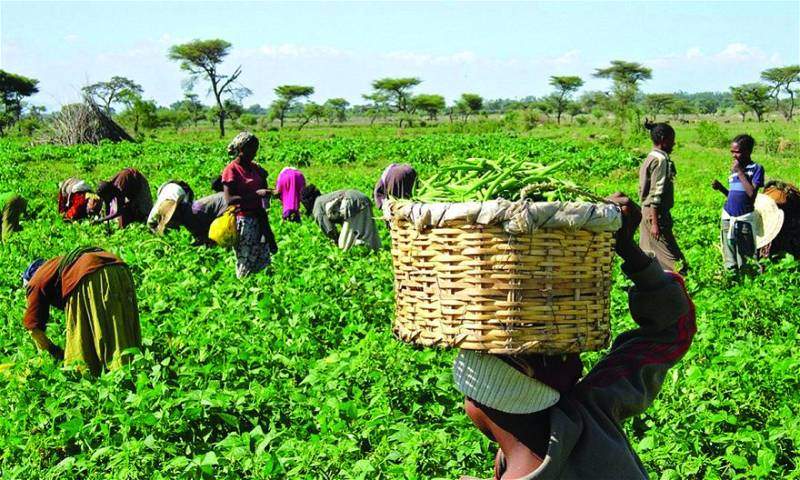
The Federal Government recently made a significant announcement regarding the distribution of agricultural inputs to farmers in Abia, Kebbi, and Yobe states. This initiative aims to support farmers in cultivating crops on over 340 hectares of farmland in these regions. The goal is to ensure the availability of staple food for citizens amidst global agricultural challenges and food shortages. The National Agricultural Land Development Authority (NALDA), a Federal Government agency, played a crucial role in distributing high-grade fertilizers, herbicides, and improved seeds to farmers in these states. In Abia and Yobe, farmers received maize seeds, while those in Kebbi received improved rice seeds. The distribution took place at various locations, with officials from NALDA overseeing the process. In Abia, farmers gathered at the NALDA Institute of Agribusiness and Entrepreneurship to receive the empowerment packages. The Executive Secretary of NALDA, Paul Ikonne, emphasized the importance of the program in ensuring food security and reducing the cost of food in the market. He assured farmers of continued support and assistance from NALDA, highlighting the government’s commitment to promoting agriculture. Similarly, in Kebbi and Yobe states, NALDA officials led the distribution of inputs to farmers in different local government areas. The beneficiaries expressed gratitude for the support and pledged to utilize the resources effectively to increase food production in their communities. The NALDA empowerment program aligns with President Bola Tinubu’s vision of achieving food sufficiency and reducing the cost of living for Nigerians. By reaching out to farmers across the country, NALDA aims to contribute to the President’s goal of ensuring food security and mitigating the impact of high food prices. Overall, this initiative underscores the government’s commitment to supporting agriculture and empowering farmers to enhance food production in Nigeria. Through strategic interventions like this, the country can work towards achieving self-sufficiency in food production and addressing food security challenges.
African Business News
2 min read
Federal Government Empowers Farmers in Abia, Kebbi, and Yobe with Agricultural Inputs
The Federal Government recently made a significant announcement regarding the distribution of agricultural inputs to farmers in Abia, Kebbi, and […]
More stories like this

African Business News
Analyst: Tinubu’s Reforms Stabilised Nigeria’s Economy

African Business News
Sycamore gets microfinance bank licence

African Business News
High borrowing costs threaten banks’ credit expansion

African Business News
Comments are closed for this story.