
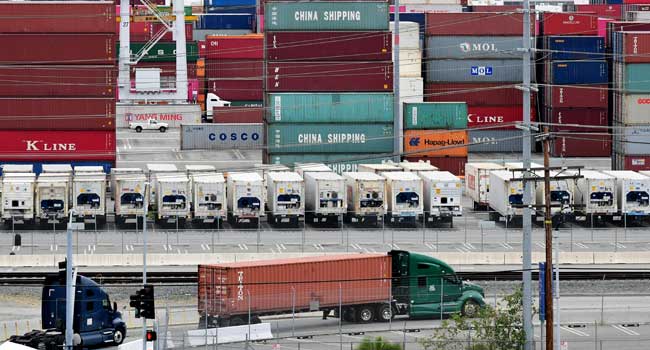
As a critical deadline in U.S.-China trade negotiations approaches, Beijing has called for constructive dialogue to ease ongoing tensions. On Monday, Chinese foreign ministry spokesman Lin Jian urged Washington to collaborate toward “positive outcomes” guided by “equality, respect, and mutual benefit.” The remarks come a day before the expiration of a provisional agreement that temporarily paused further tariff escalations between the world’s two largest economies. The 90-day truce, negotiated in May, initially set to expire in August, was extended after talks in Stockholm last month. Under the current terms, U.S. duties on Chinese imports remain at 30%, while China’s retaliatory tariffs on American goods stand at 10%. Both nations had agreed to continue discussions ahead of the August 12 cutoff, though no formal extension has been announced. The impasse stems from broader trade actions by the Trump administration, which imposed steep levies on over $370 billion in Chinese goods starting in 2018. U.S. Trade Representative Jamieson Greer emphasized following last month’s Stockholm meeting that President Donald Trump retains the “final say” on whether to prolong the tariff ceasefire. The uncertainty coincides with fresh U.S. tariffs targeting other trading partners, including a 35% duty on Canadian aluminum that took effect Thursday. These measures align with the administration’s push to recalibrate global trade dynamics in favor of American industries, a strategy Trump has framed as necessary to address trade imbalances. Analysts warn, however, that prolonged disputes risk destabilizing supply chains and dampening economic recovery efforts amid the pandemic. Officials from both sides have yet to disclose specifics of recent negotiations, though Chinese state media reiterated calls for the U.S. to “meet halfway” in resolving differences. The lack of progress on structural issues—such as intellectual property protections and technology transfers—remains a sticking point. As deadlines loom, businesses and markets worldwide await clarity on whether dialogue will avert renewed escalation. With U.S. elections approaching, geopolitical stakes are high: unresolved tensions could further strain bilateral relations, while a compromise might offer temporary respite for industries caught in the crossfire. The week’s developments will test both nations’ ability to balance domestic priorities with the economic interdependence defining modern global trade.
African Business News
2 min read
China Urges US to Push for Trade Deal Before Truce Deadline
As a critical deadline in U.S.-China trade negotiations approaches, Beijing has called for constructive dialogue to ease ongoing tensions. On […]
More stories like this

African Business News
Analyst: Tinubu’s Reforms Stabilised Nigeria’s Economy

African Business News
Sycamore gets microfinance bank licence
African Business News
High borrowing costs threaten banks’ credit expansion

African Business News
Comments are closed for this story.