
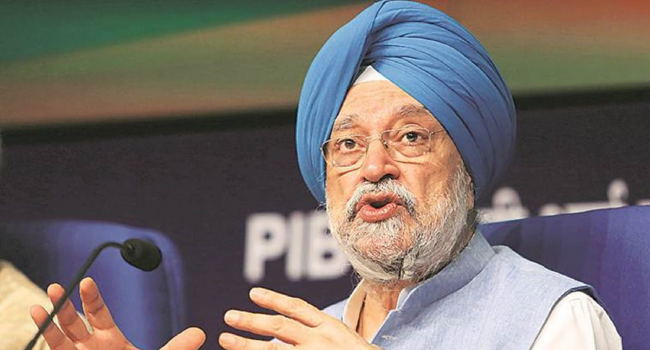
India’s oil minister, Hardeep Singh Puri, has defended the country’s imports of Russian oil, arguing that they have stabilised markets and prevented prices from soaring to as high as $200 a barrel. In an editorial in *The Hindu*, Puri explained that India’s purchases are made within the framework of a G‑7/European Union price‑cap system designed to keep oil flowing while limiting Russia’s revenues.
The United States has criticised India’s decision to continue buying Russian crude. President Donald Trump imposed tariffs on Indian exports to the United States in an effort to discourage the purchases, and Treasury Secretary Scott Bessent accused India of profiteering by importing Russian oil at lower prices and reselling refined fuel at a higher rate. Puri countered that every Indian oil transaction uses legal shipping and insurance, compliant traders and audited channels.
India has become the largest buyer of Russian seaborne oil, taking advantage of discounts offered by Russia as it seeks new customers after European countries and the United States imposed sanctions following Moscow’s invasion of Ukraine in February 2022. Puri stressed that Russian oil has never been sanctioned in the same way as Iranian or Venezuelan crude, and that India’s actions comply with international regulations.
The minister’s comments come as Prime Minister Narendra Modi meets Russian President Vladimir Putin in China at a regional summit. Puri’s defence highlights the complexity of the global energy market and the challenges countries face in navigating sanctions and price caps on oil supplies. By stabilising markets and keeping prices in check, India’s imports of Russian oil have had a significant impact on the global energy landscape.
As the world’s second‑largest oil producer, Russia’s supplies are crucial to meeting global demand, accounting for nearly 10 % of worldwide oil production. Puri noted that there is no substitute for Russian oil, and that India’s continued imports play a critical role in maintaining the balance of the global energy market. The situation will likely remain under close scrutiny by international observers as the interplay between sanctions, price caps and global demand shapes the future of the energy sector.




Comments are closed for this story.