
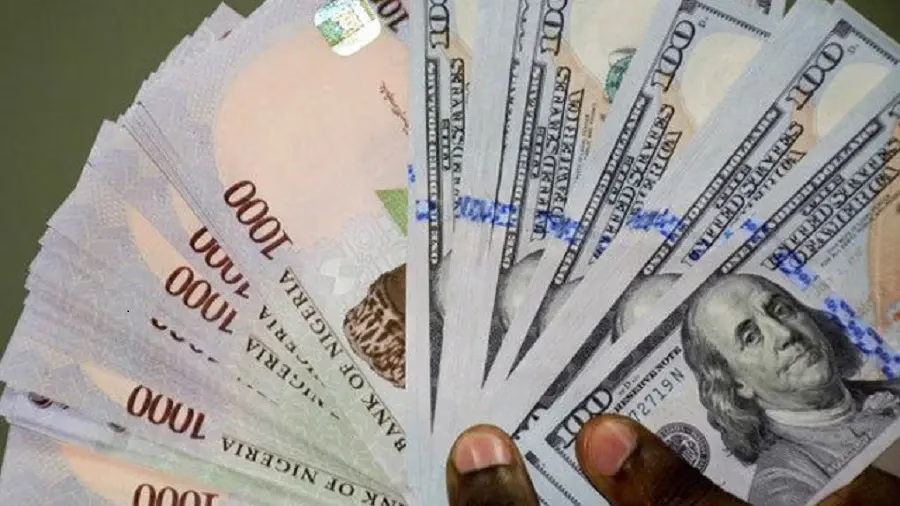
The Nigerian naira has fallen for a second consecutive day in the official foreign‑exchange market. Central Bank of Nigeria data show the rate slipped to 1,498.98 per US dollar on Thursday, down from 1,494.03 the previous day—a daily depreciation of 4.45 naira. Over the past two days the naira has weakened by 14.84 against the dollar and other foreign currencies.
In contrast, the black‑market rate remained unchanged, with the naira trading at 1,537 per dollar on Thursday, the same level as the day before. This stability suggests that the official market decline may not fully reflect the broader foreign‑exchange landscape.
The depreciation occurs despite a rise in Nigeria’s external reserves, which reached $41.95 billion as of 17 September 2025. While the growing reserves provide a buffer to support the currency, the weakening naira underscores ongoing challenges in the foreign‑exchange market.
A weaker naira can have mixed effects on the economy. Higher import costs may raise consumer prices, while a cheaper currency can make Nigerian exports more competitive abroad, potentially improving the trade balance. The Central Bank of Nigeria’s handling of the market will be closely watched in the coming days. Past measures to support the naira have included tighter monetary policy and foreign‑exchange restrictions, but it remains uncertain whether these steps will be enough to stabilize the currency or if further action will be required.
As the naira continues to fluctuate, businesses and investors will monitor the situation closely to gauge its impact on operations and investments. The ongoing depreciation highlights the complexities and challenges of managing a currency in a volatile global economic environment.



Comments are closed for this story.