
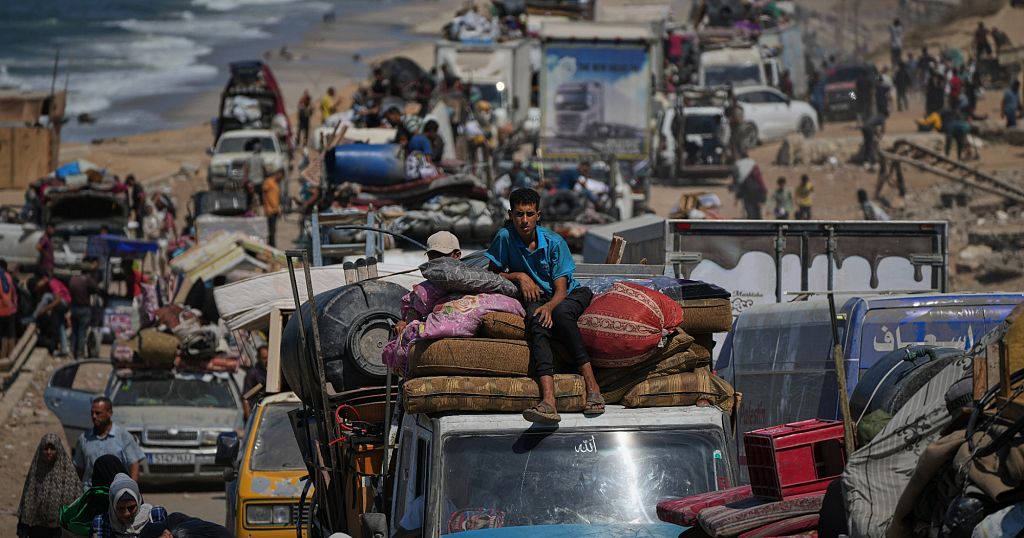
The United Nations Security Council failed to adopt a resolution calling for an immediate, permanent ceasefire in Gaza after the United States exercised its veto power. This marks the sixth time the U.S. has blocked a Gaza‑related resolution in the Council. While the other 14 members voted unanimously in favor, the U.S. envoy to the UN rejected the text, arguing that it did not sufficiently condemn Hamas nor acknowledge Israel’s right to self‑defence. Morgan Ortagus, counselor of the U.S. Mission to the UN, said the draft created a “dangerous false equivalence” between Israel and Hamas and treated hostages as an “afterthought,” and therefore the United States would not accept it.
The vote comes at a sensitive moment, just days before the UN General Assembly convenes. Major U.S. allies such as the United Kingdom and France are expected to recognise an independent Palestinian state during the gathering—a largely symbolic step that Israel and the United States strongly oppose. The Gaza conflict has long been a point of contention at the UN, and the Security Council has struggled to reach consensus on any resolution. The U.S. veto underscores the deep divisions within the international community on this issue.
As the General Assembly prepares to meet, the failed ceasefire resolution highlights the challenges ahead in addressing the Israeli‑Palestinian conflict. Recognition of a Palestinian state by key U.S. allies is likely to heighten tensions, given the strong opposition from Israel and the United States. The veto’s implications emphasize the difficulty of achieving a unified international response to the crisis and reinforce the need for renewed diplomatic efforts to resolve the situation in Gaza.



Comments are closed for this story.