
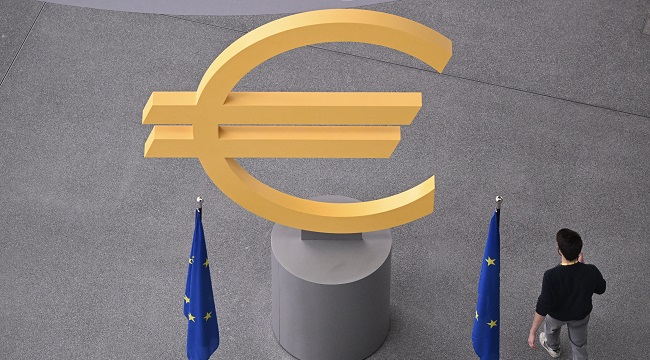
The eurozone has experienced a surge in business activity, with the pace of expansion reaching a 16‑month high in September, according to a recent survey. The S&P Global purchasing managers’ index (PMI)—a key indicator of overall economic health—rose to 51.2 this month, up from 51 in August. This marks the ninth consecutive month of growth, as any reading above 50 signifies expansion, while a figure below 50 indicates contraction.
Germany, the eurozone’s largest economy, was a significant driver of this growth, posting a solid increase in output. In contrast, France’s situation was less optimistic; activity declined for the thirteenth consecutive month. The French government’s shake‑up in early September likely disrupted companies’ production plans, contributing to the downturn. The recent resignation of François Bayrou as premier has added fresh political turmoil, with President Emmanuel Macron facing rising public anger.
Cyrus de la Rubia, chief economist at Hamburg Commercial Bank, noted that while the eurozone remains on a growth path, it is far from gaining real momentum. The outlook for manufacturing is uncertain, as production growth slows due to France’s decline, even though the rest of the single‑currency area continues to grow at a moderated rate.
The S&P Global survey provides a snapshot of the eurozone’s economic performance, highlighting uneven growth across member states. Germany’s output increase is a positive sign, but France’s activity decline is a cause for concern. As the eurozone navigates ongoing challenges, the PMI will be closely watched for indications of future growth or contraction. The current growth trend is welcome, but it remains to be seen whether the eurozone can sustain this momentum in the coming months.


Comments are closed for this story.