
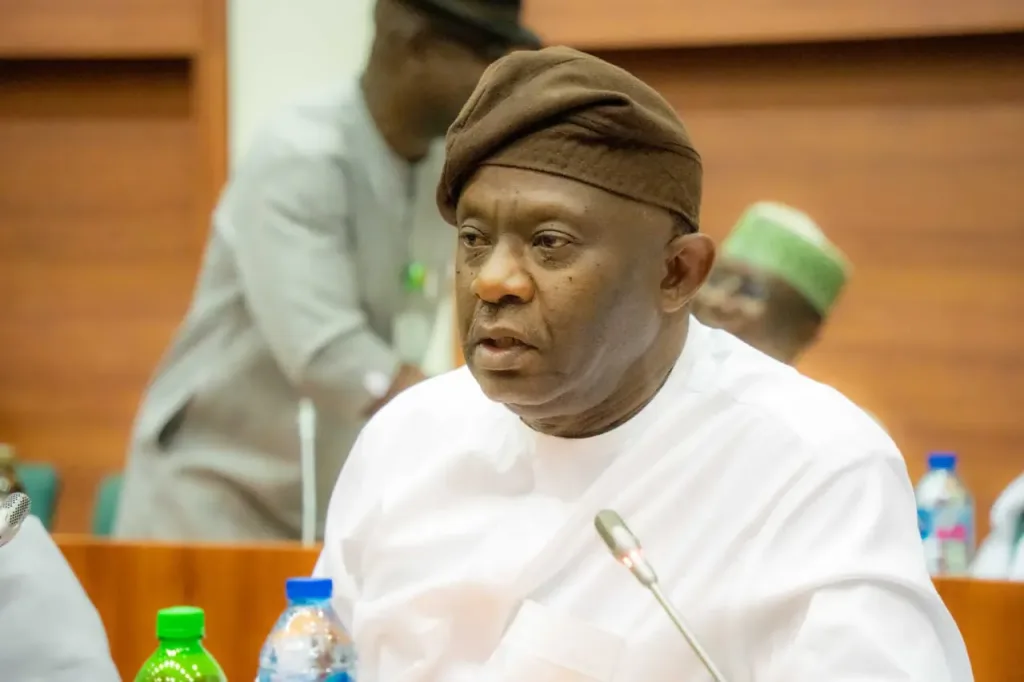
Nigerian Senator Sunday Karimi has warned the Petroleum and Natural Gas Senior Staff Association of Nigeria (PENGASSAN) to respect the Petroleum Industry Act (PIA) after the union announced it would withdraw services from the Dangote Refinery. The directive, issued by PENGASSAN General Secretary Lumumba Okugbawa, calls for the suspension of gas and crude supplies to the refinery effective 28 September, citing an industrial strategy. Karimi condemned the move as “economic sabotage,” arguing that it threatens the oil sector and reveals ulterior motives. He warned that no investor would commit to a country where a union can easily dismantle a multibillion‑dollar private investment without justification.
The Dangote Refinery, a $20 billion facility, is central to Nigeria’s drive for fuel self‑sufficiency. Karimi urged the federal government and law‑enforcement agencies to intervene, noting that the service withdrawal could lead to job losses and a setback in economic gains. Although reports suggest 800 workers have been disengaged, the refinery still employs over 3,000 Nigerians directly, in addition to numerous indirect employees, suppliers and contractors.
Karimi contrasted the situation at Dangote with other privately run sectors where union activity is limited. He observed that, after deregulation, many private investors discouraged unionism and introduced attractive compensation schemes, thereby reducing union influence. He cited Nigeria’s private universities, as well as the aviation, tourism and electricity industries, where private investors dominate and union activity is either restricted or disallowed.
The senator also recalled past union resistance to private‑sector involvement in refining, referencing former President Olusegun Obasanjo’s 2007 attempt to sell the Port Harcourt refinery, which was opposed by unions and labour groups. That opposition ultimately led Aliko Dangote to build his own facility, now one of the world’s largest single‑train refineries.
The federal government has not yet responded to calls for intervention, even as politicians and sections of the public criticize the standoff on social media. The episode remains a significant concern, with potential implications for Nigeria’s economy and investment climate. As events unfold, it remains to be seen how the government and relevant stakeholders will resolve the issue and balance the interests of all parties involved.


Comments are closed for this story.