
Nigeria’s leather industry is largely export‑oriented, with nearly 90 % of its hides shipped abroad, primarily to Italy and Spain. These exports generate about $600 million in annual revenue, yet the finished products bear international brand labels that erase any trace of their Nigerian origin.
Nigerian designers are now working to reclaim the country’s leather identity by creating high‑end items that proudly display a “Made in Nigeria” heritage. One such designer is Isi Omiyi, a 56‑year‑old who has founded a homegrown brand producing luxury leather bags, wallets and shoes. Her mission is to amplify Nigerian craftsmanship and promote the “Made in Nigeria” label. Omiyi’s carefully crafted pieces are showcased in a boutique corner in Lagos, with some items priced as high as $1,500.
In Kano, a northern state, major international luxury brands source leather through intermediaries who connect them with local tanners. The state hosts 11 tanneries, including Ztannery, which processes hides from raw to semi‑finished leather. However, modern tanneries equipped with state‑of‑the‑art machinery only accept large orders paid in dollars or euros, effectively excluding local designers who would pay in the local currency.
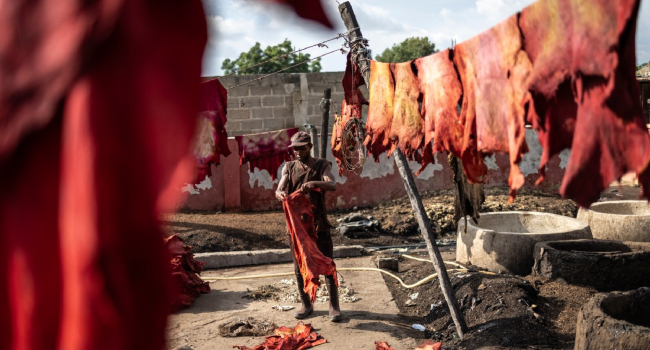
To bridge this gap, many designers turn to traditional tanneries such as Majema, founded in 1932 in the heart of Kano city. At Majema everything is done manually; dozens of tanners clean and dye hides directly on the earthen floor. Although the tannery exports hides to neighboring countries and Europe, the finishing work is completed abroad, resulting in products labeled “Made in Italy” or “Made in Spain” rather than “Made in Nigeria.”
Efforts to promote Nigeria’s leather industry and restore its identity are gaining momentum. The Lagos Leather Fair, an annual event founded by Femi Olayebi in 2017, brings together roughly 100 leather professionals in the commercial hub. Additionally, the state government has launched a factory in Lagos’s Mushin neighbourhood, aiming to produce leather goods and create 10,000 jobs. Nigerian designers are calling for better machinery, access to high‑quality local leather, and training to compete with global industry giants.
For David Lawal, brand executive of Morin O, promoting Nigerian identity through leather products is essential. Many customers seek a “timeless expression of heritage” narrated through leather items created and crafted in Nigeria. As the industry continues to grow, recognizing and promoting the country’s rich heritage and craftsmanship becomes increasingly important.




Comments are closed for this story.