
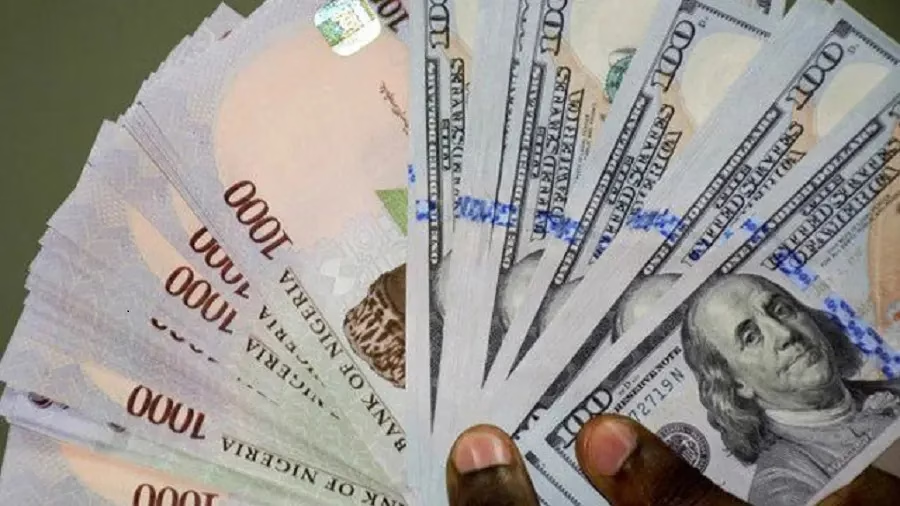
The Nigerian naira fell against the United States dollar at the start of the week, affecting both the official and parallel foreign‑exchange markets. Data from the Central Bank of Nigeria show the naira slipped to N1,470.26 on Monday, down from N1,465.68 on Friday—a weakening of N4.58 per dollar. In the parallel (black) market, the rate also declined, dropping to N1,505 per dollar on Monday from N1,495 at the close of business on Friday. Bureau de change operators attributed the fall to rising demand for foreign exchange, a pattern that mirrors the depreciation observed on Friday.
Despite the currency’s slide, Nigeria’s external reserves have continued to grow, reaching $42.44 billion as of 3 October 2025. The increase in reserves indicates a buildup of foreign assets, which could influence the naira’s value in the future.
The naira’s decline carries significant implications for the Nigerian economy. A weaker currency makes imports more expensive, potentially raising consumer prices, while simultaneously enhancing the competitiveness of Nigerian exports in global markets. The Central Bank of Nigeria’s efforts to manage the foreign‑exchange market and stabilize the naira will be closely watched in the coming days. Combined with the rising external reserves, these actions may help mitigate the effects of depreciation and support economic growth. Ongoing monitoring of developments in Nigeria’s foreign‑exchange market is essential to understand their impact on the country’s economy.



Comments are closed for this story.