
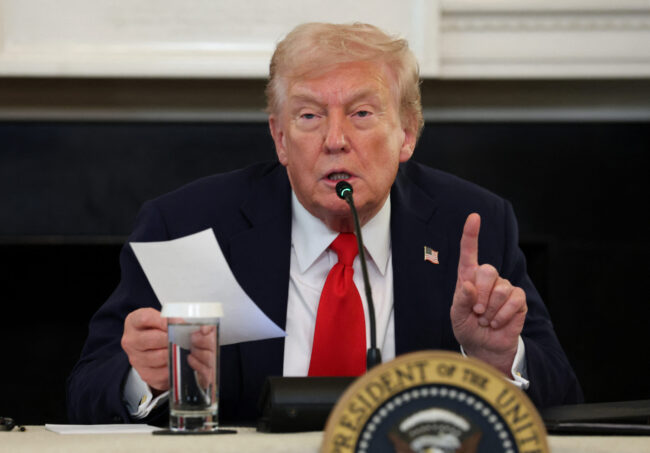
U.S. President Donald Trump has condemned China’s decision to halt American soybean purchases, calling it an “economically hostile act.” In response, he suggested that the United States could cease buying Chinese cooking oil and consider other trade retaliations. On his social‑media platform, Trump wrote, “We are considering terminating business with China having to do with cooking oil, and other elements of trade, as retribution.” This comment followed remarks in which he appeared to downplay tensions with China, saying, “We have a fair relationship with China, and I think it’ll be fine. And if it’s not, that’s okay too.”
Trade tensions between the world’s two largest economies have intensified during Trump’s presidency, with both sides imposing substantial duties on each other’s goods. U.S. Treasury Secretary Scott Bessent recently accused China of seeking to harm the global economy through new export controls on rare earths, a strategically important sector. Trump emphasized the need for caution in dealings with China, noting the country’s tendency to “take advantage of people,” and expressed concern about the impact of the soybean halt on U.S. farmers.
In recent years, the United States has markedly increased its imports of animal fats, greases, and processed oils, including cooking oil. Despite a temporary de‑escalation, the broader U.S.–China trade dispute remains unresolved. After China imposed fresh controls on rare‑earth exports, Trump announced plans to impose an additional 100 % tariff on Chinese goods starting November 1. The U.S. Trade Representative indicated that this timeline could be accelerated depending on China’s actions.
China, the world’s leading producer of rare‑earth minerals essential to the auto, electronics, and defense industries, has accused the United States of “double standards” and vowed to “fight to the end” in the trade war. The U.S. has threatened to scrap a planned meeting between Trump and Chinese President Xi Jinping at the upcoming Asia‑Pacific Economic Cooperation summit. The ongoing trade tensions continue to have significant implications for the global economy.



Comments are closed for this story.