
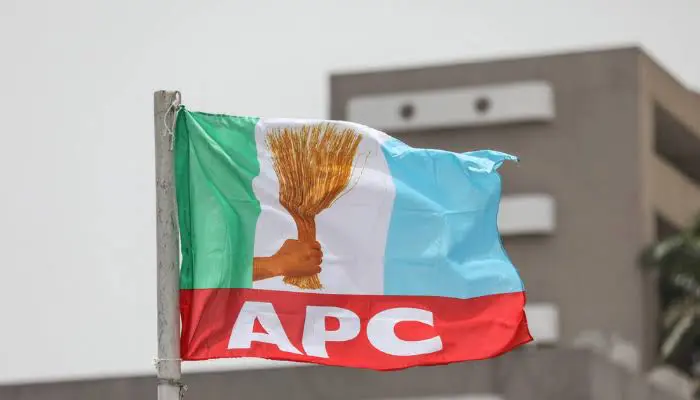
A visiting professor at Taraba State University, Jalingo, has warned that the recent wave of defections from various political parties to the ruling All Progressives Congress (APC) in Nigeria is driven by fear of losing in the 2027 general elections and a desire to evade anti‑corruption scrutiny. Professor Jonah Onuoha, who also serves as Director of the Centre for American Studies at the University of Nigeria, Nsukka, described the trend as evidence that many Nigerian politicians lack genuine political ideology and are motivated by personal interest. He noted that these politicians are seeking a platform that will help them win elections while avoiding investigation by agencies such as the Economic and Financial Crimes Commission (EFCC).
Onuoha expressed concern that the spate of defections could further weaken the opposition Peoples Democratic Party (PDP). He cited the recent defection of Enugu State Governor Peter Mbah and the entire PDP structure in the state to the APC as a significant loss for the opposition. The professor warned that if the trend continues, Nigeria might drift toward a one‑party system by 2027, a development he called unhealthy and dangerous for democracy.
Supporting Onuoha’s view, Dr. Chinedu Ejezie, a senior lecturer in the Department of Political Science at the University of Nigeria, Nsukka, argued that good governance and electoral success are not dependent on belonging to the ruling party. Ejezie pointed out that all 36 states have been receiving their monthly federal allocations without discrimination since President Bola Tinubu assumed office in May 2023. He highlighted opposition leaders such as governors Alex Otti of Abia State, Charles Soludo of Anambra State, and Seyi Makinde of Oyo State, who are performing well without defecting to the APC.
The wave of defections has significant implications for Nigeria’s political landscape, particularly for the opposition PDP, as the country approaches the 2027 general elections. Observers expect the trend to continue, raising concerns about its impact on the nation’s democratic system. The federal government and relevant agencies will be closely watched to see how they respond to this development and its potential effects on Nigeria’s democracy.


Comments are closed for this story.