
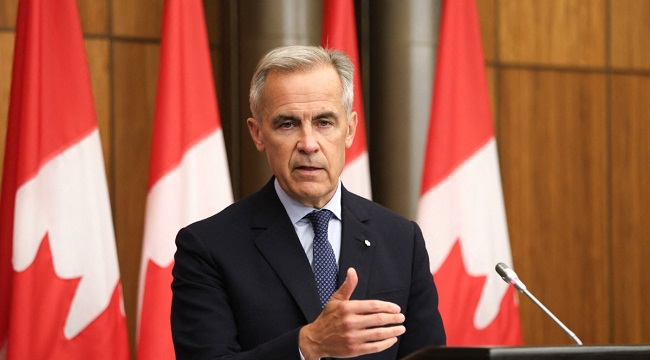
Canadian Prime Minister Mark Carney is set to unveil his government’s first budget on Tuesday, presenting a spending plan aimed at mitigating the impact of U.S. tariffs on the country’s economy. Carney, a former central‑bank leader, has positioned himself as the ideal person to navigate Canada through the challenges posed by the Trump administration’s trade policies. The tariffs have had a significant effect on Canada, leading to increased unemployment and squeezing businesses in key sectors such as autos, aluminum and steel.
Acknowledging the need for a new approach, Carney said the budget will answer the question of how Canada can achieve growth despite trade headwinds. The Liberal government’s plan is expected to address the new geopolitical realities facing the nation, with a focus on defense spending and national projects that promote economic sovereignty. It will increase defense outlays to meet NATO targets and allocate funds to initiatives such as port expansion, energy production and critical‑mineral extraction.
Finance Minister François‑Philippe Champagne has described the budget as an “investment budget” designed to build the Canada of tomorrow. While the measures aim to reduce Canada’s reliance on the United States, Carney cautioned that this transformation will not happen overnight. The budget’s passage is not guaranteed, as the Liberals lack a majority in parliament and will need opposition support. The Conservatives, the largest opposition party, have demanded deficit reduction, while the left‑wing New Democrats may abstain from voting.
Despite the uncertainty, University of Ottawa public‑policy expert Geneviève Tellier expects a large deficit and sees little chance of the government falling. Carney expressed confidence that the budget is the right plan for the country at this moment and indicated a willingness to defend his proposals in an election if necessary, emphasizing that the budget is not a game. The outcome of the vote will be closely watched, given its significant implications for Canada’s economic future and its relationship with the United States.



Comments are closed for this story.