
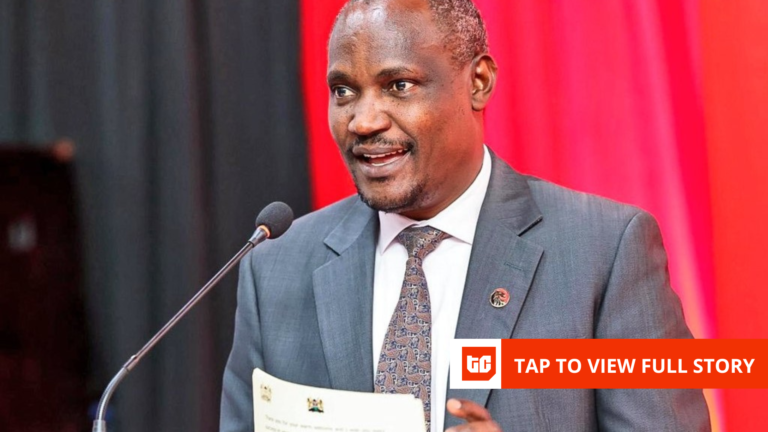
Kenya’s finance minister, John Mbadi, announced that negotiations with the International Monetary Fund (IMF) over a new lending program have reached a stalemate. The impasse stems from a disagreement about debt classification: the IMF wants to treat securitized loans for infrastructure projects as sovereign debt, a categorisation Nairobi opposes.
The Kenyan government has been seeking a new IMF bailout since the previous $3.6 billion agreement expired in April. A fresh loan is needed to support economic development and stabilise the country’s finances. Mbadi said that further talks will be held to reach an agreement, although no specific timeline has been set.
In parallel, Kenya is exploring alternative financing options, including a bond issuance slated for later this month that is expected to raise $1.3 billion. A recent positive development was the successful re‑profiling of a $5 billion loan from China, used to build a modern railway, which saved the Treasury millions in interest payments.
Kenya’s external debt now stands at $40.5 billion, with the World Bank, eurobond investors and China as the largest creditors. According to Treasury data, the country owes $14.4 billion to the World Bank, $7.52 billion to eurobond investors, and nearly $5.04 billion to China.
The IMF loan is viewed as crucial for Kenya to manage its debt obligations and achieve economic stability. The stalemate with the IMF is therefore a significant development, as the nation’s growth and development depend on securing new financing. International investors and creditors will be closely watching Kenya’s ability to manage its debt and obtain new loans, while the outcome of the ongoing talks will have major implications for the country’s economic future.


Comments are closed for this story.