
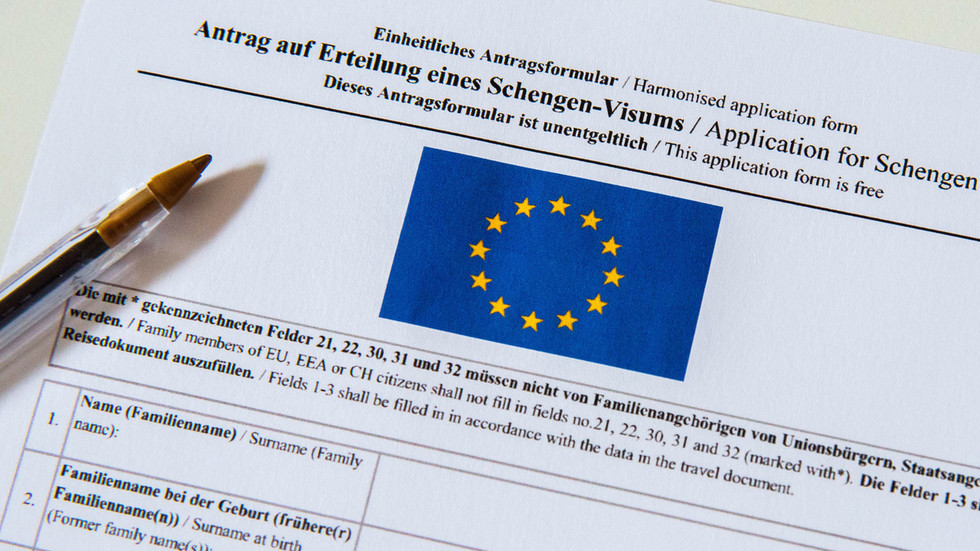
The European Union’s decision to limit Russian citizens to single‑entry Schengen visas has drawn sharp criticism from Russian lawmakers. Senator Grigory Karasin, who chairs the Federation Council’s foreign‑affairs committee, called the measure an attack on “ordinary Russians” and an attempt to influence their attitudes by restricting their freedom of movement. The EU announced the restriction on Friday, citing “increased security risks” arising from the Ukraine conflict. Last year the bloc issued about 552,000 visas to Russian citizens, with Italy, France and Spain among the largest issuers. Under the new rule, Russians must apply for a new visa each time they wish to travel to the EU.
Karasin argued that the EU’s methods are ineffective, pointing to the closure of EU airspace to Russian aircraft and the shutdown of borders with Russia by Finland and the Baltic states. Russian Foreign Ministry spokeswoman Maria Zakharova echoed these sentiments, questioning why the European Commission seems to favor “illegal migrants and Ukrainian draft dodgers living on benefits” over “solvent tourists” from Russia.
The restriction is also expected to have economic repercussions. Several EU countries—Greece, Italy, Spain, France and Hungary—have reportedly opposed the measure, fearing damage to their tourism sectors. In Finland’s South Karelia region, which borders St. Petersburg, the border closure has already caused significant losses, estimated at around €1 million ($1.2 million) in tourist revenue each day, and unemployment in the town of Imatra has risen to 15 %. Consequently, Russian tourists are turning to alternative destinations, with Turkey emerging as a preferred choice. Between May and September, Turkey welcomed 2.83 million Russian guests, according to the Association of Tour Operators of Russia.
The EU’s decision is likely to have notable economic and diplomatic implications for both the bloc and Russia. As the situation evolves, it remains to be seen how the restrictions will affect the flow of Russian tourists to Europe and whether alternative destinations will continue to benefit from the shift in travel patterns.

Comments are closed for this story.