
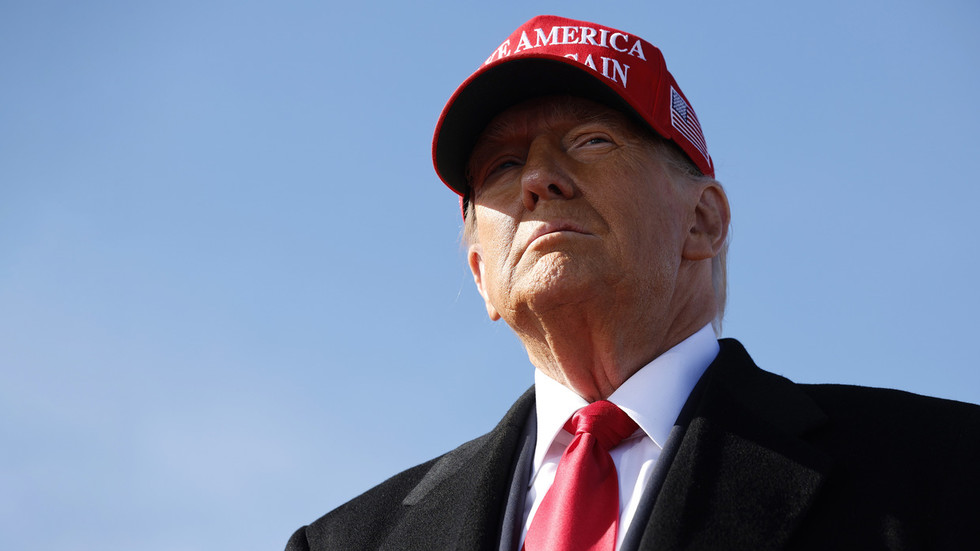
U.S. President Donald Trump has said he would be willing to order military strikes in Mexico to combat drug cartels, even though such action could face opposition from Mexican authorities. Speaking to reporters, Trump indicated that launching strikes to stop drug smuggling would be “OK” with him, but he declined to comment on whether he would seek Mexico’s permission, asserting that the country’s officials were already aware of his stance.
The United States has been critical of Mexico’s efforts to curb drug‑smuggling networks, especially those trafficking fentanyl into the U.S. In response, Washington has imposed sanctions on Mexican banks, companies and individuals alleged to be linked to cartels, and has applied a 25 % tariff on Mexican imports. While Mexico has cooperated with the United States on anti‑drug initiatives, it firmly rejects any foreign military presence on its soil. President Claudia Sheinbaum has repeatedly warned that U.S. military action in Mexico without consent would not be allowed, citing concerns over sovereignty.
Trump’s proposed strikes would broaden his administration’s campaign against narcotics trafficking throughout Central and South America. He has already labeled Colombian President Gustavo Petro and Venezuelan President Nicolás Maduro as “drug leaders,” and dispatched a naval armada to the western Caribbean to combat smuggling. Since September, U.S. forces have targeted 21 alleged drug‑smuggling vessels, resulting in more than 80 deaths. Trump has said he would be “proud” to strike cocaine factories in Colombia and has not ruled out sending troops to Venezuela to fight cartels.
The U.S. buildup and strikes have drawn criticism from regional leaders. President Petro called Trump “a barbarian,” while President Maduro warned of a potential “forever war” in the region. These developments underscore the complex and sensitive nature of U.S.–Mexico relations, particularly regarding drug trafficking and national sovereignty. As tensions rise, the unfolding situation will have significant implications for regional stability and cooperation.


Comments are closed for this story.