
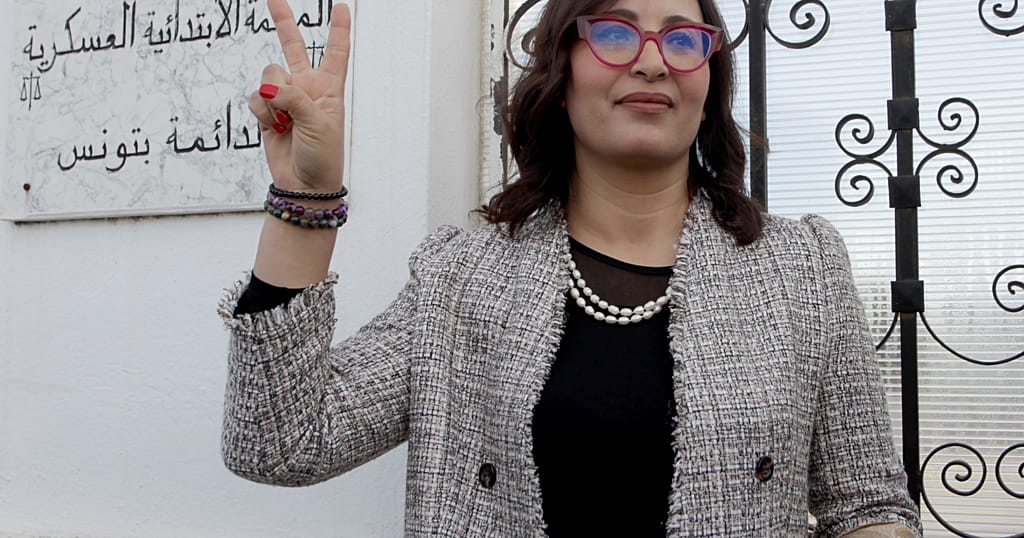
Tunisian authorities arrested prominent opposition figure Chaima Issa on Saturday while she was taking part in a protest in the capital. Her detention follows an appeals‑court ruling that handed lengthy prison sentences to a group of opposition leaders, businessmen and lawyers, raising alarm over the country’s increasingly authoritarian direction under President Kais Saied. The opposition figures, including Issa, were charged with conspiracy to overthrow the president, with penalties ranging up to 45 years.
Just before her arrest, Issa—who received a 20‑year sentence—called on the divided opposition to unite and intensify demonstrations against Saied’s government. She urged Tunisians to keep protesting and to reject what she described as tyranny. Human Rights Watch condemned the trial as a “travesty of justice,” warning that democratic freedoms in Tunisia are eroding.
The arrests are part of a broader crackdown on dissent that began after Saied’s power grab in July 2021, when he suspended parliament and expanded executive authority to rule by decree. Since then, he has jailed many critics, including opposition politicians, activists and journalists, claiming the need to end years of chaos and corruption. Opponents argue, however, that his actions are aimed at consolidating power and silencing dissent.
The international community has expressed concern over Tunisia’s deteriorating human‑rights situation, calling for the release of political prisoners and the restoration of democratic institutions. Issa’s arrest is likely to heighten tensions, with further detentions expected. Despite the risk of arrest and repression, the opposition has pledged to continue protesting against Saied’s government. As events unfold, the world will be watching closely to see how the situation develops in this North African nation. Tunisia’s democratic transition is at a critical juncture, and the coming weeks will be decisive for the country’s future trajectory.


Comments are closed for this story.