
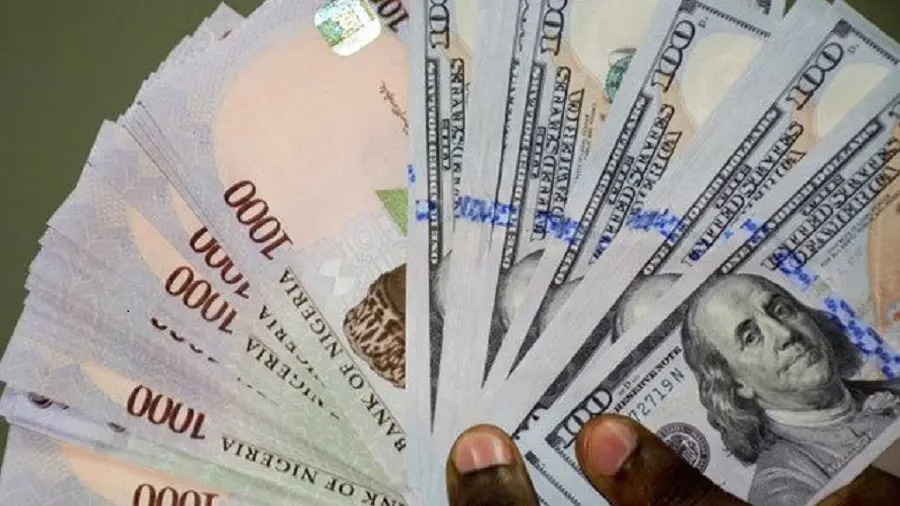
The Nigerian naira began the week on a downward trend, depreciating against the United States dollar in both the official and parallel foreign‑exchange markets. According to data from the Central Bank of Nigeria, the naira weakened to N1,451.86 per dollar on Monday, down from N1,450.4287 on Friday—a decline of N1.43 in the official market. In the parallel market, the naira fell more sharply, dropping N15 to N1,490 per dollar compared with N1,475 on Friday.
This depreciation occurs despite Nigeria’s external reserves reaching a six‑year high of $45.11 billion as of December 5, 2025. On Monday, the Central Bank also published a list of 82 fully licensed Bureau De Change operators, a step aimed at regulating the foreign‑exchange market and ensuring stability.
The naira’s slide is significant for Nigeria’s economy, given the country’s reliance on imports and the impact of exchange rates on inflation. However, the surge in external reserves suggests a substantial buffer to absorb economic shocks. The foreign‑exchange market has been volatile in recent years, with the naira experiencing notable fluctuations against major currencies. To stabilize the market, the Central Bank has implemented measures such as restricting foreign‑exchange access for certain imports and introducing a flexible exchange‑rate regime.
As Nigeria continues to navigate challenges from the global pandemic and declining oil prices, the naira’s performance will be closely watched by investors and policymakers. The Central Bank’s efforts to regulate the foreign‑exchange market and maintain economic stability will be crucial in shaping the naira’s trajectory in the coming weeks and months.



Comments are closed for this story.