
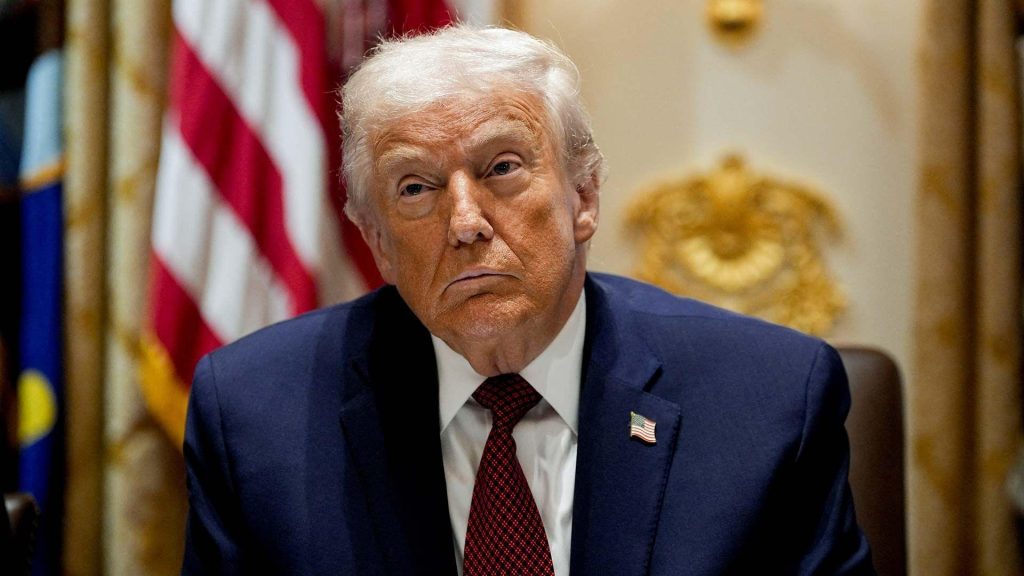
The United States has imposed travel restrictions on Nigeria, citing the presence of terrorist groups and high visa‑overstay rates. In a proclamation, President Donald Trump noted that “radical Islamic terrorist groups such as Boko Haram and the Islamic State operate freely in certain parts of Nigeria.” This statement underscores the significant security concerns that have led to Nigeria’s inclusion on the list of restricted nations.
According to the U.S. government, Nigeria’s B‑1/B‑2 visa overstay rate stands at 5.56 %, while the overstay rate for F, M, and J visas is 11.90 %. Although these rates are relatively low compared to other countries on the list, the threat of terrorism appears to be the primary factor in the decision. Nigeria has struggled for years with Boko Haram and other extremist groups, and the United States has been vocal about its concerns.
In contrast, other nations on the restricted list have markedly higher overstay rates. Angola, for example, records a B‑1/B‑2 overstay rate of 14.43 % and an F, M, and J overstay rate of 21.92 %. Benin’s rates are 12.34 % and 36.77 %, respectively. Countries such as Gabon, The Gambia, and Malawi also exceed Nigeria’s overstay figures.
The U.S. decision aligns with recent statements on Nigeria’s situation. In October, President Trump designated Nigeria a “Country of Particular Concern” due to severe violations of religious freedom. The United States has led discussions on violence against Christians in Nigeria at the United Nations and has threatened to deploy forces to eliminate terrorist groups. Recent U.S. actions include a congressional delegation’s fact‑finding mission to Nigeria, whose findings were described as “heartbreaking,” and the development of a strategic security framework to combat ISIS and Boko Haram.
These travel restrictions represent a significant development in U.S.–Nigeria relations. As the situation evolves, it remains to be seen how the Nigerian government will respond to U.S. concerns and what steps will be taken to address the country’s security challenges. The international community will be watching closely, given the potential implications for regional stability and global security.



Comments are closed for this story.