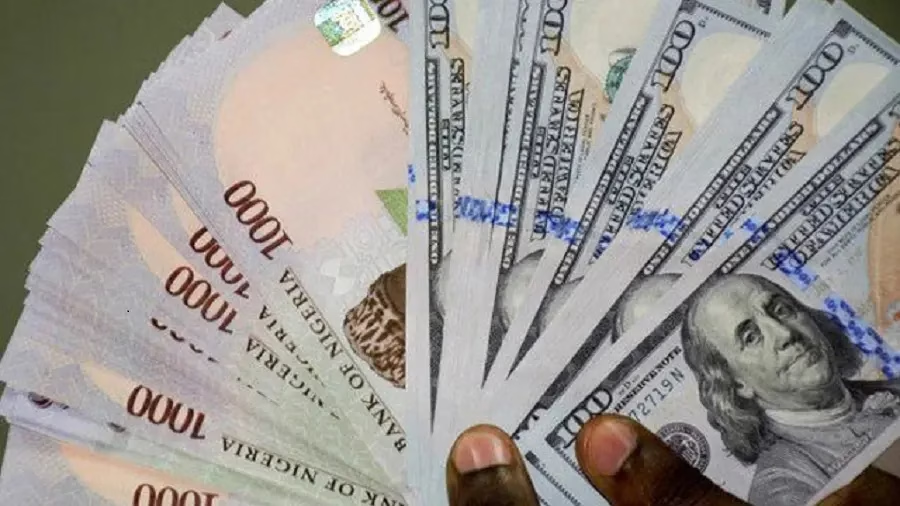
The Nigerian naira has weakened against the U.S. dollar over the past 48 hours, according to recent data from the Central Bank of Nigeria. On Wednesday, the official exchange rate fell to 1,455.4983 naira per dollar, down from 1,451.8169 on Monday—a depreciation of 3.7 naira in two days. The central bank’s figures reflect the naira’s recent performance in the official foreign‑exchange market.
In contrast, the black‑market rate has remained steady at 1,495 naira per dollar since Monday, as reported by several bureau‑de‑change operators in Abuja. Nigeria’s external reserves have also slipped slightly, standing at $45.32 billion on December 15, 2025, compared with $45.47 billion on December 12.
These developments could affect the country’s economy, particularly foreign‑exchange stability and monetary policy. The naira’s depreciation may stem from a mix of market forces and economic indicators. The Central Bank of Nigeria has been working to maintain stability in the foreign‑exchange market, and this recent decline may prompt further intervention.
In Nigeria’s economic landscape, the naira’s performance is closely watched by investors, businesses, and individuals. A stable currency is essential for trade, investment, and growth, so the central bank and other stakeholders are likely to monitor the situation closely to keep the naira competitive and stable. The decline could have significant implications for the trade balance, inflation, and overall economic performance. As the country navigates its challenges, the foreign‑exchange market will remain a key focus, and continued central‑bank efforts to stabilize the currency will be crucial.