
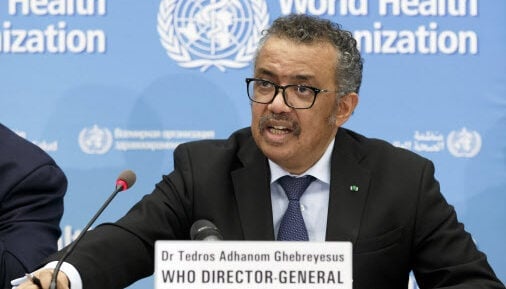
The World Health Organization has launched the Traditional Medicine Global Library, a comprehensive digital platform that consolidates more than 1.6 million resources on traditional medicine. Unveiled at the second WHO Global Summit on Traditional Medicine in New Delhi, the library aims to transform access to trusted information and accelerate research worldwide. It includes advanced tools such as Evidence Gap Maps and an AI‑powered application to facilitate research and innovation.
The summit, jointly organised with the Government of India, also introduced Health & Heritage Innovations, an initiative designed to nurture breakthrough ideas that combine traditional practices with cutting‑edge technologies. From over 1,000 submissions, 21 finalists were selected to participate in a year‑long acceleration programme, during which they will refine their prototypes and connect with policymakers and investors.
In addition, the WHO announced the formation of the Strategic and Technical Advisory Group on Traditional, Complementary and Integrative Medicine, composed of 19 independent experts who will guide the Global Strategy. The Delhi Declaration, signed by 26 Member States, marks a significant shift toward integrating traditional medicine into primary health care, strengthening regulation and safety standards, and investing in research. The declaration emphasizes that traditional medicine should not remain a parallel system but become a driver of universal health coverage.
According to WHO Director‑General Dr Tedros Ghebreyesus, the Delhi Commitment signals a new era for traditional medicine, focusing on action rather than mere recognition. Traditional medicine can help address modern health threats, including non‑communicable diseases, inequitable access to health services, and climate change. The WHO will work with Member States to turn these commitments into reality by scaling access to trusted knowledge, accelerating innovation, and embedding traditional medicine into health systems worldwide.
The Global Traditional Medicine Strategy 2025–2034 charts a course toward a future where care is more inclusive, culturally grounded, and resilient. The summit attracted over 16,000 online registrations and 800 delegates from more than 100 countries, highlighting the potential of traditional medicine to strengthen health systems with safer, evidence‑based, and affordable care. With the launch of the Traditional Medicine Global Library and the Delhi Declaration, the WHO has taken significant steps toward promoting the integration of traditional medicine into modern healthcare systems.
Comments are closed for this story.