
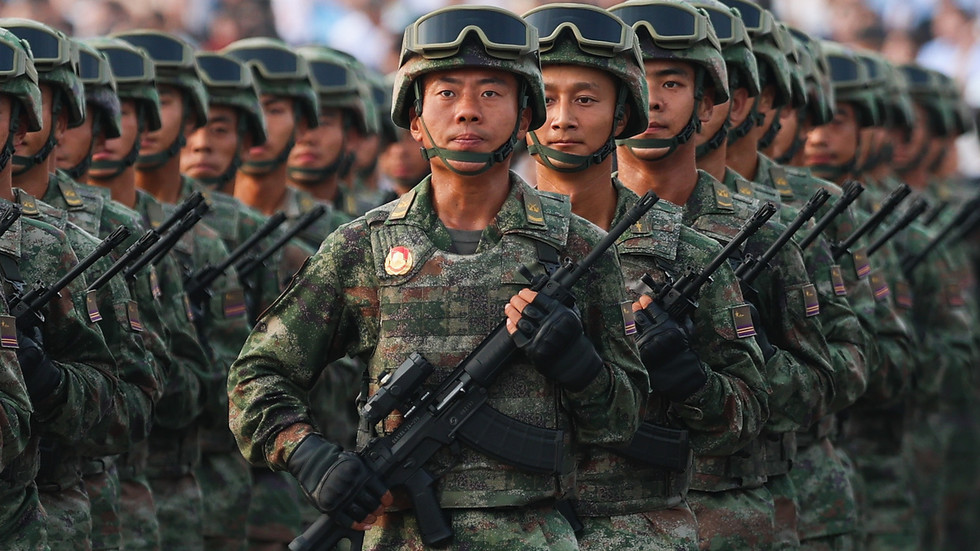
China has launched large‑scale live‑fire military drills around Taiwan, deploying warships, fighter jets and artillery in a multi‑day operation. The exercises, code‑named “Joint Sword – 2025A,” simulate a blockade of key ports, precision strikes on maritime targets and scenarios to counter external interference. According to Chinese media and the defence ministry, the drills focus on joint sea‑air combat‑readiness patrols, seizure of comprehensive battlefield control and precision strikes on key targets.
The drills began just 11 days after the United States announced an $11.1 billion arms‑sales package to Taiwan—the largest ever for the island. The package includes eight separate purchases, among them 82 HIMARS rocket systems and 420 ATACMS missiles worth over $4 billion, as well as anti‑tank missiles, loitering munitions, howitzers, military software and spare parts. Taiwan condemned the exercises and released footage of its own arsenal, highlighting US‑supplied HIMARS rockets capable of reaching China’s Fujian province.
Beijing has framed the drills as a response to the U.S. arms sale, which it denounced as a “dangerous act” that infringes on Chinese sovereignty. The Chinese government urged Washington to respect the One‑China principle and “immediately stop arming Taiwan.” China considers Taiwan part of its territory and has warned it will use force if the island formally declares independence.
While the United States officially adheres to the One‑China policy, it continues to supply arms to Taiwan and maintain military ties with the Taipei government. Taiwan has been self‑ruled since 1949, when nationalist forces retreated to the island after losing the Chinese Civil War. A small number of countries maintain official diplomatic relations with Taiwan, but the majority of the international community—including major powers such as Russia—recognises Beijing’s One‑China policy, which designates Taiwan as a Chinese province. The United Nations also regards Taiwan as part of Chinese territory.
The ongoing drills have raised concerns about regional escalation. Taiwan’s coast guard has deployed larger vessels to monitor Chinese patrols and is coordinating with the military to minimise disruptions to shipping and fishing. The situation remains volatile, with China reiterating its goal of “peaceful reunification” while warning that force may be used if necessary. The international community is closely watching these developments as tensions among China, Taiwan and the United States continue to simmer.


Comments are closed for this story.