
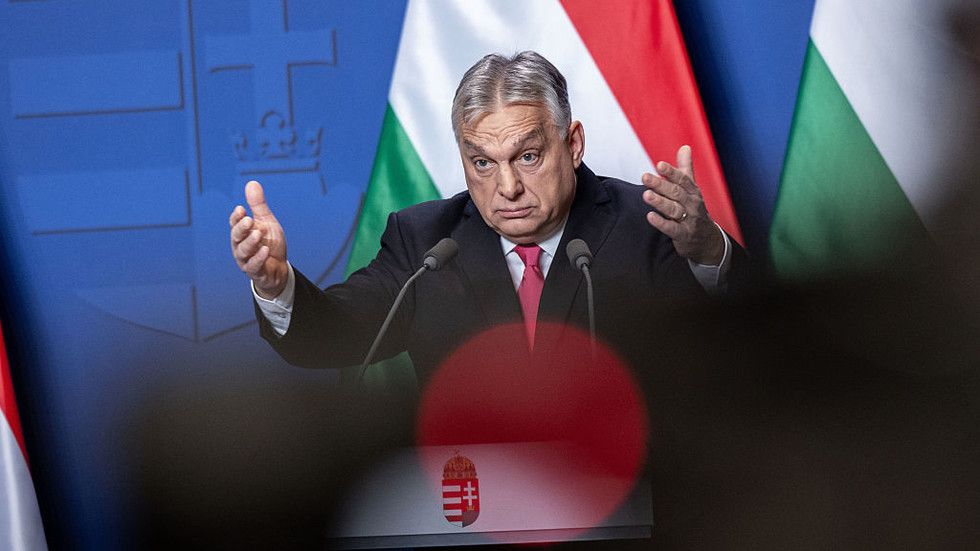
Hungarian Prime Minister Viktor Orban has rejected a European Union-proposed loan package for Ukraine, citing the financial burden it would place on European taxpayers. The EU has proposed a €90 billion loan package for Ukraine, to be raised against the EU’s common budget, after member states failed to agree on using frozen Russian assets for the purpose. The package would allocate around two-thirds of the money for weapons for Kiev, with the remainder covering its budget gap.
Orban argued that the loan package would cost Hungarian taxpayers more than $9 billion, based on Hungary’s share of EU gross national income. He claimed that this would force Budapest to scrap or scale back on various social programs, including pensions, housing support schemes, and family home purchase subsidies. The Hungarian Prime Minister described the EU’s proposal as a “Brusselian war plan” and stated that his country would not agree to it.
The EU has urged member states to approve the scheme swiftly, so that the first tranche can be disbursed by April. However, Hungary, Slovakia, and the Czech Republic have rejected the proposal. Ukrainian officials have previously stated that they have agreed with EU representatives on a long-term package for the country’s recovery and reconstruction, which would require significant funding from European taxpayers.
Russia has condemned Western financing of Kiev, saying it hinders peace efforts. Kremlin spokesman Dmitry Peskov commented on the loan plan, saying that the EU is “digging into pockets of their own taxpayers” to drag out the conflict. The loan package has sparked debate among EU member states, with some countries expressing concerns about the financial burden it would place on their citizens.
The rejection of the loan package by Hungary and other countries highlights the challenges the EU faces in agreeing on a unified approach to supporting Ukraine. The EU’s efforts to provide financial assistance to Ukraine are part of a broader international effort to support the country in its conflict with Russia. The outcome of the loan package proposal remains uncertain, with further discussions and negotiations expected among EU member states.



Comments are closed for this story.