
An airport vital to eastern Democratic Republic of Congo came under attack by explosive drones over the weekend, the Tshopo provincial government confirmed Monday. The unmanned aerial vehicles targeted the civilian and military facility in Kisangani, a major city of over 1.5 million people, between Saturday and Sunday.
According to the provincial statement, eight “enemy drones” were intercepted and neutralized before they could strike their intended target within the airport perimeter. There were no reports of casualties or significant physical damage. Security was visibly reinforced around the site on Monday, witnesses told Agence France-Presse (AFP). The local carrier, CAA, continued its scheduled domestic flights to the city, indicating minimal immediate disruption to commercial operations.
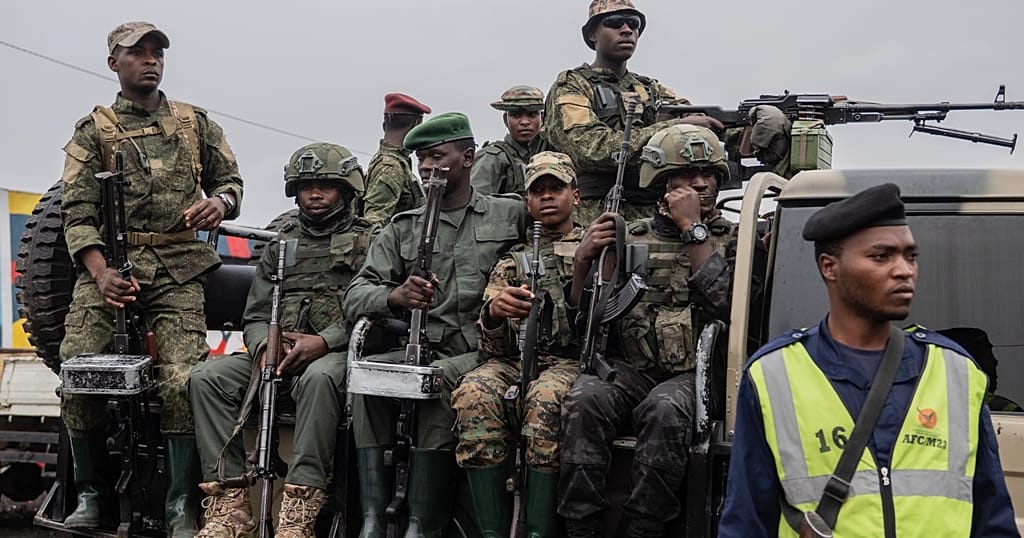
Local authorities have not claimed responsibility for the attack but explicitly accuse the M23 armed group and its ally, Rwanda, of orchestrating it. The M23, a predominantly Tutsi rebel force, has waged a major resurgence since late 2021, seizing large territories in eastern DRC with alleged Rwandan support. The group captured the critical provincial capitals of Goma and Bukavu in early 2023, and launched a fresh offensive on the border town of Uvira in early December, even as the DRC and Rwanda formalized a U.S.-brokered ceasefire framework.
Kisangani’s airport is a strategic asset in a region with severely degraded road infrastructure. Its runway is used by the Congolese military (FARDC) for transport aircraft and, reportedly, for launching its own drone and jet operations against M23 and Rwandan positions. These strikes are conducted from a distance exceeding 400 kilometres (250 miles). The overnight explosions prompted some nearby residents to flee their homes until the early hours of Sunday.
“The situation is under control,” the Tshopo government stated, advising displaced residents they could return. The incident underscores the persistent volatility of Congo’s east, a mineral-rich region bordering Rwanda, Burundi, and Uganda, which has endured nearly three decades of conflict involving numerous foreign actors and armed groups. While Kisangani is far from the current main front lines in South Kivu, the drone attack suggests the conflict’s reach and the use of asymmetrical tactics continue to expand. The event highlights the fragility of key infrastructure in a region already grappling with a profound humanitarian crisis.



Comments are closed for this story.