
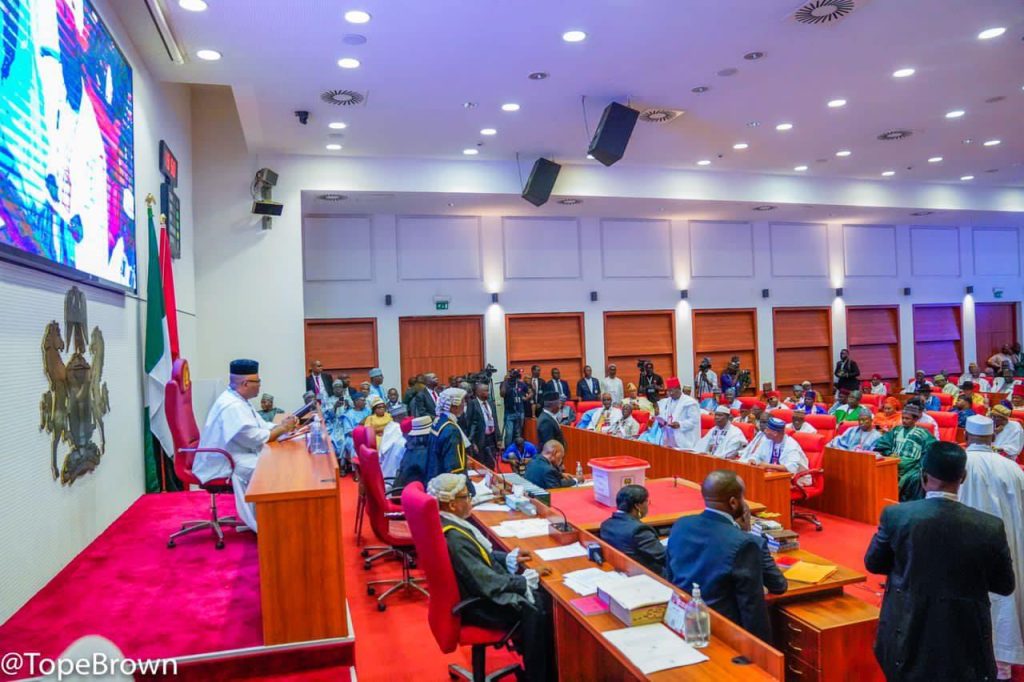
Nigerian Senate Passes Electoral Act Amendment, Upholds Electronic Result Transmission
The Nigerian Senate has passed the Electoral Act (Amendment) Bill, a comprehensive legislative update designed to strengthen the regulatory framework for federal, state, and Area Council elections in the Federal Capital Territory (FCT). The passage follows a clause-by-clause review by senators in the Committee of the Whole.
Announcing the outcome, Senate President Godswill Akpabio directly addressed widespread speculation, stating unequivocally that the Senate did not reject electronic transmission of election results. “This senate, under my watch, has not rejected electronic transmission of results,” he said. Akpabio clarified that the Senate chose to retain the existing provision for electronic transmission, which was already part of the 2020 Electoral Act and used in previous polls. “What we did was to retain the electronic transmission… That’s all we did,” he added, urging the public to consult official records to verify the decision.
The bill introduces several specific amendments. Clause 47 formalises the Bimodal Voter Accreditation System (BVAS) as the mandatory mode for voter accreditation, with the Permanent Voter Card serving as the identification document. Offences related to voter card trafficking under Clause 22(C) have been tightened, with penalties now set at a maximum fine of N5 million or two years imprisonment for buying, selling, or offering to sell votes.
The timelines for critical electoral activities have been adjusted. The notice period for elections by the Independent National Electoral Commission (INEC) has been reduced from 360 days to 180 days.Political parties are now required to submit their official candidates to INEC no later than 90 days before a general election.
To resolve any differences with the House of Representatives, which passed its own version, Senate President Akpabio announced the membership of a Conference Committee, chaired by Senator Niyi Adegbbonmire. The eight-member panel includes Senators Simon Lalong, Mohammed Monguno, Adamu Aliero, Orji Kalu, Abba Moro, Asuquo Ekpenyong, Aminu Abbas, and Tokunbo Abiru. Akpabio charged the committee with expediting harmonisation so the bill can be transmitted to President Bola Tinubu for assent within the month, enabling the procurement process for the 2027 elections to commence.
The Senate subsequently adjourned its sitting until February 24 to allow for budget defence sessions.
The amendment bill represents a significant update to Nigeria’s electoral legal framework, aiming to enhance transparency and efficiency in a system that has faced scrutiny over past elections. Its final enactment will set the concrete rules for the next general election cycle.




Comments are closed for this story.