
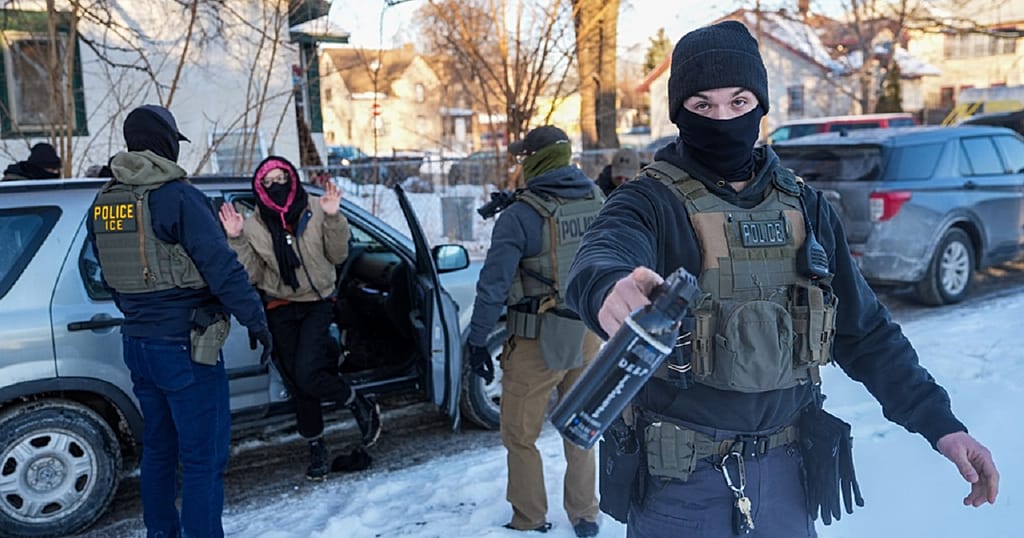
Minneapolis residents have expressed deep scepticism following President Donald Trump’s announcement that some federal immigration officers will be withdrawn from the city, a move coming after two fatal shootings by ICE agents last month sparked national condemnation.
The killings of an unarmed woman, Renee Good, and an intensive care nurse, Alex Pretti, have placed a spotlight on federal enforcement tactics in the US. In an interview with NBC, President Trump stated that 700 federal officers involved in immigration operations would be removed from Minneapolis, though he affirmed that mass deportation efforts would continue. While he described the deaths as “a very sad incident,” he also defended Immigration and Customs Enforcement (ICE), saying, “I’m going to always be with our great people of law enforcement, ICE, police.”
Local reactions to the partial withdrawal were largely dismissive. Minneapolis resident Amber Isham said she distrusts the administration’s statements, calling them “nothing but lies” and advocating for ICE to be abolished entirely. Her husband, Jeffrey Isham, noted that the reduction represents less than a third of the federal force present, with about 2,000 immigration agents still operating across Minnesota. He termed the announcement “a placating gesture at best,” suggesting it lacks substantive impact.
The fatal encounters have intensified a national debate over immigration enforcement and police use of force. Governor Tim Walz and Mayor Jacob Frey, both Democrats, characterised the withdrawal as “a step in the right direction” but urged the federal government to accelerate the wind-down of its operations in the state.
The incidents in Minneapolis echo broader tensions in the United States regarding federal immigration policy and community safety. While the administration signals a tactical adjustment, critics argue that a reduction in ICE’s visible presence does not address systemic concerns. The situation remains a focal point for activists and lawmakers pushing for comprehensive reform of federal immigration enforcement.
Further clarification on the timeline and scope of the withdrawal is awaited, as communities continue to grapple with the aftermath of the shootings and the future of federal operations in Minneapolis. The episode underscores the persistent clash between local demands for accountability and federal mandates on immigration control.


Comments are closed for this story.