
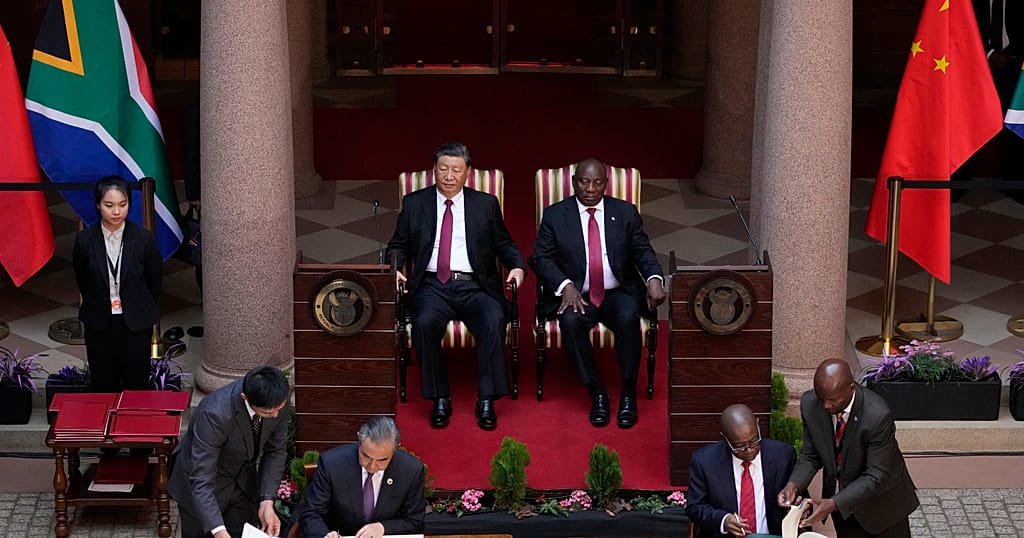
South Africa and China are finalising an agreement that will grant duty-free access to the Chinese market for selected South African products, as Pretoria intensifies efforts to diversify its trade partnerships amid U.S. tariffs and broader economic realignment.
The deal, announced by South Africa’s trade ministry, will be signed by Trade and Industry Minister Parks Tau during his upcoming visit to Beijing. It includes provisions for tariff-free entry of specific exports and seeks to attract Chinese investment into South Africa’s key sectors. The ministry stated that this aligns with Pretoria’s objective to expand export markets and drive growth, although it did not specify which industries will benefit from the duty-free arrangement.
China’s role as South Africa’s largest trading partner, a position secured in 2023 after surpassing the European Union, provides critical context. Bilateral trade is heavily weighted toward South African exports of minerals—including platinum, gold, and iron ore—and agricultural products such as citrus, wine, and maize. Duty-free access would lower costs for South African exporters, enhancing competitiveness in China’s large consumer market and potentially increasing trade volumes.
This pivot is partly fueled by U.S. trade actions. In August 2023, the Trump administration imposed 30% tariffs on a range of South African goods, citing unfair trade practices. South African officials have cautioned that these measures risk thousands of jobs, particularly in manufacturing and agriculture, and are engaged in negotiations with Washington to secure exemptions or revised terms. Simultaneously, diplomatic tensions have escalated over the past year on issues including geopolitical stances and climate policy, straining transatlantic relations.
Minister Tau’s itinerary also includes meetings with Chinese companies interested in investing in South African infrastructure, energy, and mining projects. This dual focus on market access and investment capital reflects South Africa’s strategy to stimulate economic growth, reduce unemployment, and lessen vulnerability to external shocks. The trade ministry underscored that the China agreement is a cornerstone of a broader market diversification drive.
Historical reliance on commodity exports has left South Africa’s economy exposed to price volatility and demand shifts. Expanding into Asian markets, particularly China, offers a buffer against protectionist trends in Western economies. The pending deal follows existing frameworks like the Africa-China Free Trade Agreement but represents a targeted bilateral effort to deepen ties.
As global trade dynamics shift, South Africa’s outreach to China underscores a pragmatic recalibration. The agreement, once signed, will require detailed implementation schedules and sectoral coordination. If successful, it could bolster South African export revenue, spur job creation, and signal a shift in the nation’s trade diplomacy away from traditional partners toward emerging blocs. This development arrives at a pivotal moment for South Africa’s economy, which contends with slow growth and seeks sustainable pathways for development.
The signing is anticipated in the coming weeks, with both sides likely to highlight the deal as a mutual win for economic cooperation and resilience.




Comments are closed for this story.