
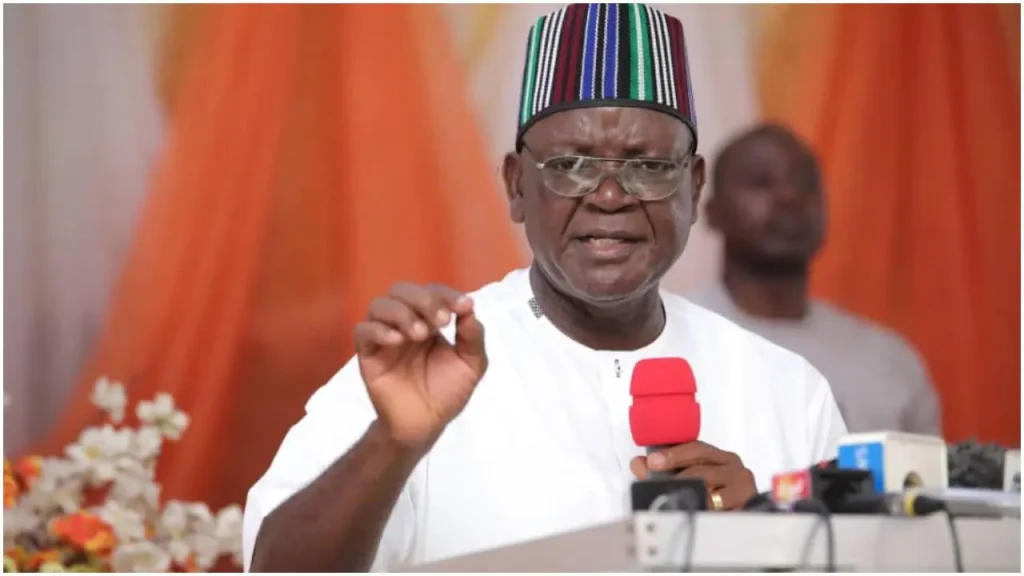
Former Benue State Governor Samuel Ortom has categorically denied reports claiming he defected to the ruling All Progressives Congress (APC), calling the allegations a fabrication and reaffirming his commitment to the opposition Peoples Democratic Party (PDP).
In a statement released through his Media Adviser, Terver Akase, Ortom dismissed the defection rumours as “false and misleading.” He alleged the claims are a deliberate fabrication by political opponents unsettled by his continued influence in Benue State politics. The statement accused the authors of producing a fake APC membership card, which they circulated online to substantiate the false narrative. “This act is not only irresponsible but also exposes the depth of desperation among those behind it,” it read, noting that the alleged defection exists solely in the promoters’ imagination.
Ortom, who served as governor of Benue State from 2015 to 2023, emphasized that he remains a “proud, committed, and influential member” of the PDP. He restated his leadership role, confirming he is the leader of the PDP in Benue State and a respected member of the party’s Board of Trustees.
Benue State, located in Nigeria’s Middle Belt region, is a critical electoral area known for its agricultural significance and diverse ethnic composition. The APC has been the national ruling party since 2015, while the PDP functions as the main opposition. Political defections frequently occur in Nigeria’s landscape, often perceived as strategic moves ahead of elections. However, misinformation campaigns, including the circulation of forged documents, are commonly used to undermine political figures.
Ortom’s denial follows speculation about his political alignment after leaving office. His reaffirmation of PDP loyalty may solidify his standing among supporters in Benue State, a region where he maintains considerable sway. The incident also underscores the volatile nature of pre-election politicking, where false narratives are deployed to create confusion and weaken opponents.
As Nigeria approaches the 2027 general elections, such events highlight the persistent challenges of political integrity and the use of digital platforms to spread unverified claims. Ortom’s statement serves as a direct rebuttal to attempts to question his allegiance, reinforcing his active role within the PDP. The broader implication is a reminder of how misinformation can shape public perception, even as key figures like Ortom navigate their influence in state and national politics. For now, his focus appears steadfast on contributing to the PDP’s strategies in Benue State and beyond.




Comments are closed for this story.