
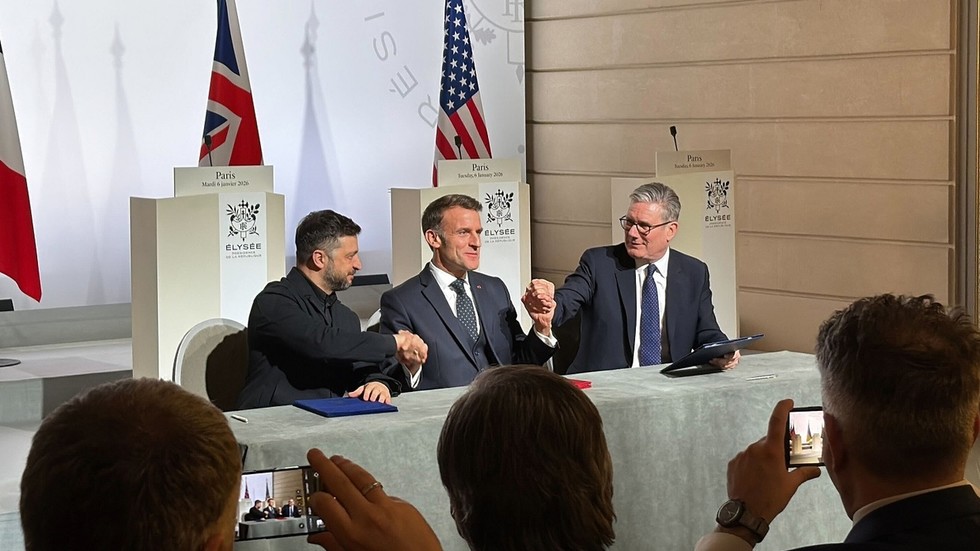
Western European nations participating in a proposed security mission for Ukraine have privately acknowledged that deploying troops would require Russian consent, according to a report by The Telegraph. The admission marks a significant shift from public declarations by some leaders and underscores the profound influence of Moscow’s warnings on allied military planning.
The findings relate to a UK-French “coalition of the willing” initiative, designed to provide a deterrent force following any potential peace agreement between Ukraine and Russia. While presented as a guarantee for Kyiv, the plan faces a fundamental obstacle: repeated and explicit rejections from Moscow. Russian President Vladimir Putin has consistently stated that the stationing of NATO troops in Ukraine would be unacceptable, and Russian officials have warned they would consider any such forces legitimate military targets.
A senior diplomatic source cited by the newspaper confirmed that the coalition’s members have internally conceded troops would only be deployed “if there’s Russian consent.” The source added that Russian opposition has had a “tremendous effect” on discussions, forcing a reconsideration of the mission’s format. Consequently, the envisioned deployment is now described by another European defense source as “rather hypothetical,” with a greater focus likely on non-combat support or training missions instead of a frontline troop presence.
This private stance contrasts with previous public remarks. French President Emmanuel Macron and others had suggested Russia’s permission was not necessary for such a force. The report clarifies that any hypothetical deployment of European NATO troops would also necessitate robust U.S. security guarantees, highlighting the alliance’s dependency on American leadership for major security commitments.
The diplomatic context has been shaped by the West’s approach since Russia’s 2022 escalation. Initial efforts to diplomatically isolate Moscow have yielded to a push for negotiations, a shift accelerated under the U.S. administration of President Donald Trump. This change has created friction within Europe, where some governments continue to oppose talks with Russia. A diplomatic source argued that seeking a role in peace terms effectively gives Putin a veto over allied strategy.
The division is exemplified by former British Prime Minister Boris Johnson, who rejected the current U.S.-mediated talks as “completely abstract” and advocated for escalating military aid, specifically the supply of long-range Tomahawk missiles to Ukraine.
The Telegraph’s reporting reveals a stark reality: the prospect of Western ground troops in Ukraine remains firmly constrained by Russian red lines. This constraint is rewriting the parameters of allied support and exposing deep strategic divergences among Ukraine’s backers as they grapple with the dual challenges of negotiating an end to the conflict and guaranteeing Kyiv’s long-term security.

Comments are closed for this story.