
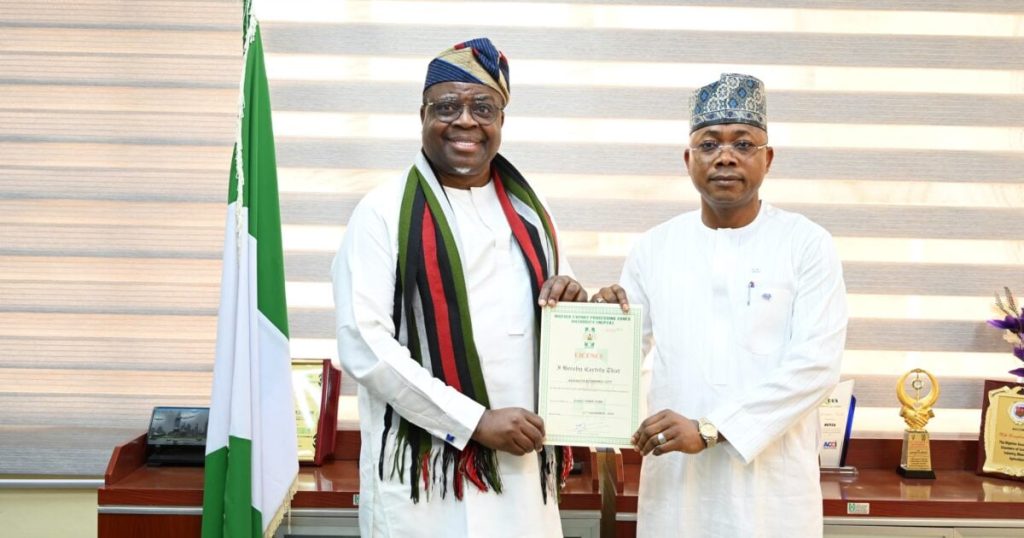
Kogi State has obtained final licensing for the Ajaokuta Economic City Free Trade Zone, a major step in Nigeria’s long-stalled efforts to revive its steel industry and exploit solid mineral resources. The licence, presented to Governor Usman Ododo by the Nigeria Export Processing Zones Authority (NEPZA) in Abuja, formalises the establishment of the 4,000-hectare industrial hub approved by President Bola Tinubu last year.
Governor Ododo stated the zone is a “historic turning point” aimed at transforming Ajaokuta into a West African economic hub. He highlighted Kogi State’s strategic location, bordering multiple commercial centres and the Federal Capital Territory, and its endowment with over 30 commercially viable solid minerals, including iron ore, coal, and lithium. The governor stressed the zone is designed to attract significant foreign and local investment, positioning it to lead among Nigeria’s special economic zones.
The initiative is directly linked to the decades-dormant Ajaokuta Steel Complex. Ododo confirmed federal assessments of the steel plant are underway, with a target to resume operations before year’s end. He argued the new free trade zone would provide essential downstream industries—such as steel fabrication and manufacturing—complementing the steel plant and boosting exports and job creation.
NEPZA Managing Director Dr. Olufemi Ogunyemi described the licence as the beginning of a “long journey,” pledging agency support for development. He explained that free trade zones operate under a globally recognised “one-stop-shop” model to streamline regulations, attract investment, and promote exports. All interactions with businesses in the zone will be channelled through NEPZA to ensure efficiency.
The Ajaokuta Economic City is the latest addition to Nigeria’s special economic zones framework, bringing the total licensed and regulated by NEPZA to approximately 46. This expansion is part of broader federal reforms to improve the investment climate, diversify the economy beyond oil, and leverage the country’s solid minerals sector. For Kogi State, the project forms a cornerstone of Governor Ododo’s legacy, with plans for an adjacent international airport to enhance connectivity to Abuja.
Analysts view the project as a critical test for Nigeria’s industrialisation drive, aiming to unlock dormant assets through private-sector-led development within a regulated zone. Its success hinges on securing investor confidence and the concurrent revival of the adjacent steel complex.



Comments are closed for this story.