
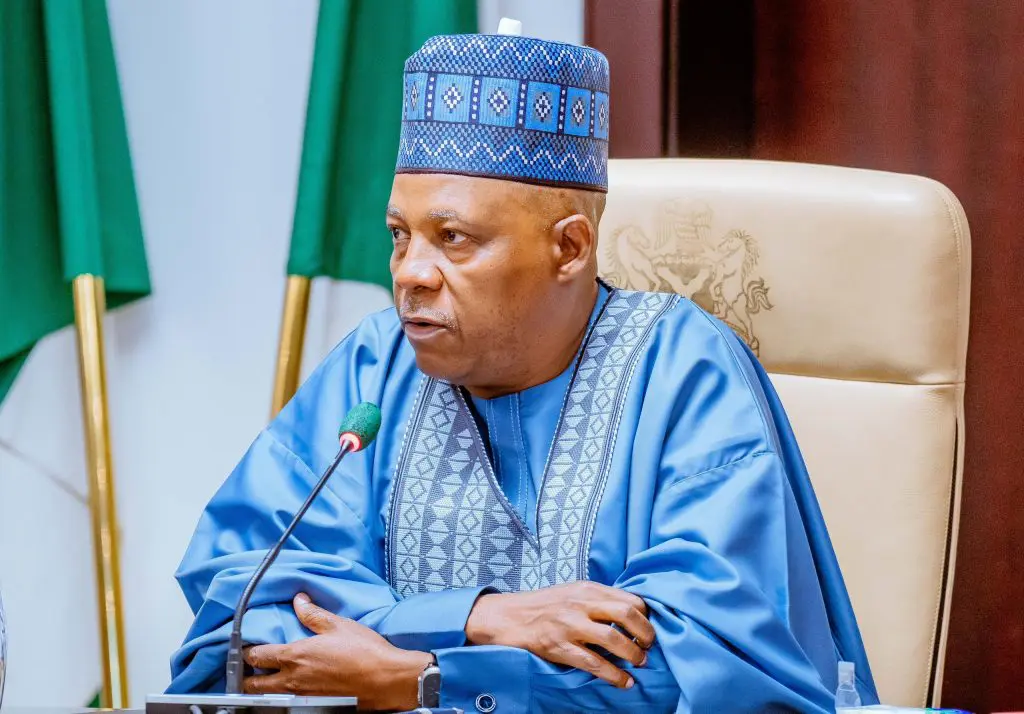
Farmers’ Group Warns APC Against Replacing Vice President Shettima in 2027
A leading farmers’ association has cautioned that replacing Vice President Kashim Shettima ahead of the 2027 general elections could jeopardize the All Progressives Congress’s (APC) support from a significant voting bloc. Umar Abdullahi, National President of the Millet Farmers Association, issued the warning following speculation about the vice president’s future on the party’s ticket.
Speaking in an interview with Trust TV, monitored by the Media Talk Africa, Abdullahi stated that Shettima’s performance and loyalty warrant his retention. He emphasized that the vice president has successfully discharged his duties and represented Nigeria competently on international platforms. “There is no basis for changing Shettima. He’s still loyal. He’s still capable,” Abdullahi said, arguing that any replacement would need to be justified by concrete wrongdoing, which he claimed does not exist.
The farmers’ leader directly linked the APC’s electoral prospects to Shettima’s continued candidacy, noting that his association and many others voted for the party in 2023 because of the Muslim/Muslim presidential ticket shared by President Bola Tinubu and Shettima. “We voted because of the Muslim/Muslim ticket,” Abdullahi stated. He warned that removing Shettima would erode that goodwill, asserting, “APC will have problems because a lot of farmers will not vote for the APC.”
This perspective highlights the political weight of the 2023 presidential ticket, which was a decisive factor in securing support in Nigeria’s northern region. While President Tinubu and Vice President Shettima have not indicated any plans for a change, internal party dynamics and strategic calculations for the next election cycle often fuel such speculation. Abdullahi’s statement, coming from a representative of the agricultural sector, underscores how specific demographic groups are already mobilizing around perceived political guarantees.
The significance of this warning lies in its reflection of how foundational decisions from the previous election continue to shape coalition politics. For the APC, maintaining the cohesion of its 2023 voting blocs—including key northern constituencies and the agricultural sector—remains critical for any 2027 strategy. The Millet Farmers Association’s public stance suggests that the vice presidential slot is viewed not as a negotiable position but as a non-negotiable component of the party’s pact with its base.
As Nigeria’s political landscape gradually shifts toward the next electoral cycle, such statements from interest groups signal early pressures on party hierarchies. The assurance or alteration of the Tinubu-Shettima partnership will likely be a pivotal narrative in the APC’s internal discussions and public messaging in the coming years.




Comments are closed for this story.