
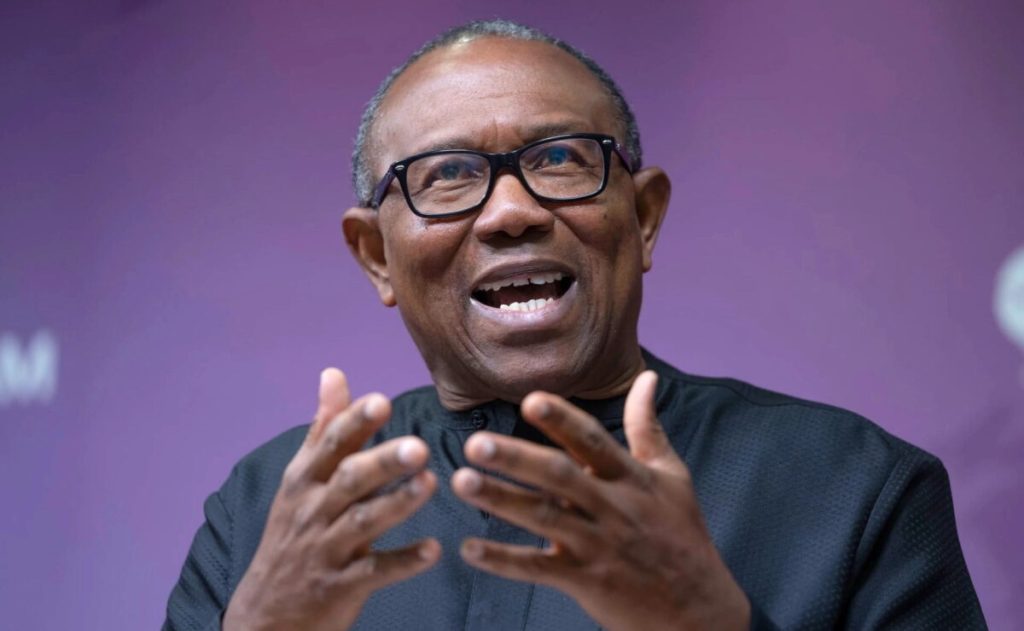
Peter Obi Expresses Uncertainty Over 2027 ADC Presidential Ticket, Commits to Political Cause
Former Nigerian presidential candidate Peter Obi has stated he cannot be certain of securing the presidential ticket of the African Democratic Congress (ADC) for the 2027 elections, while reaffirming his dedication to the broader political project he champions.
In a video address to his followers, Obi directly responded to questions about his future with the ADC. “Someone asked me how I know for sure that the ADC will give me the presidential ticket. I cannot be certain,” he said. He framed the immediate challenge as beyond a single ticket, emphasizing commitment to a collective cause. “What matters is that we are committed to a cause. I keep wondering how we ended up in this situation and what might happen if we decide to stop working on this project.”
Obi, who was the presidential candidate for the Labour Party in the 2023 elections, acknowledged the resilience required of opposition supporters in Nigeria’s political landscape. He thanked loyal followers for their sacrifice, noting the absence of immediate rewards. “It’s not easy to be in the opposition in Nigeria, and I’m thankful to those who keep supporting even when there’s no clear reward,” he stated.
He also voiced skepticism about the reliability of current political alliances. “How can we be certain that the people we’re working with right now won’t leave us behind tomorrow? I wish we could be sure, but we can’t,” Obi remarked, highlighting a fundamental uncertainty in opposition strategy.
Obi’s comments come as political maneuvering for the 2027 general election begins to intensify. The ADC, while a registered party, holds a minor presence in the National Assembly compared to the ruling All Progressives Congress (APC) and the main opposition Peoples Democratic Party (PDP). Obi’s potential candidacy under its banner is seen by analysts as a test of the viability of third-force options in Nigerian politics, following his strong showing in 2023 where he garnered significant support, particularly among young urban voters.
While Obi did not announce a definitive decision on his 2027 ambitions, his statements signal a cautious approach. He underscored that the pursuit is driven by principle rather than a guarantee of electoral success. His focus remains on sustaining the movement that coalesced around his 2023 campaign, which advocated for change, accountability, and efficient governance.
The significance of Obi’s stance lies in its reflection of the complexities facing Nigeria’s fragmented opposition. Without guaranteed party support or stable alliances, building a unified challenge to the established political duopoly remains a formidable task. His call for continued commitment despite uncertainty sets the tone for what is expected to be a prolonged and strategic period of political realignment ahead of the next presidential election cycle. The ADC’s internal processes and its willingness to endorse a high-profile candidate like Obi will now be closely watched as a key indicator of opposition cohesion.


Comments are closed for this story.