
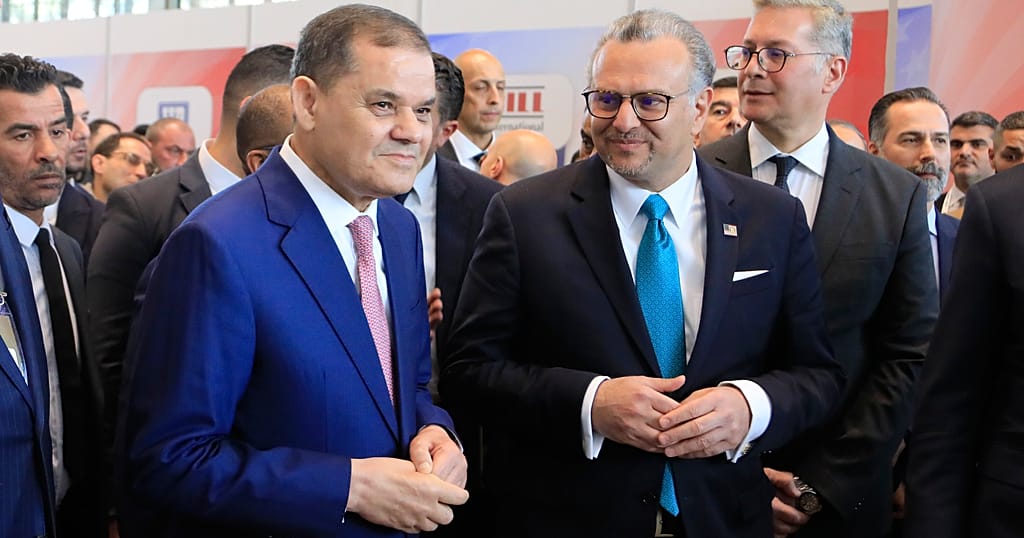
Libya’s UN-backed Prime Minister Abdulhamid Dbeibah has announced a cabinet reshuffle, stating the move is intended to enhance government performance and accelerate service delivery to citizens. Approximately 10 of the 27 ministerial positions were changed in the adjustment, though Dbeibah will retain his dual roles as defence and foreign affairs minister.
The reshuffle aims to address persistent regional divisions within the government by rebalancing the distribution of key portfolios among Libya’s western, southern, and eastern regions. This follows noted tensions between the prime minister and two significant political figures: Mohamed el-Menfi, who represents Libya’s three regions, and Mohamed Takala, head of the High State Council. Both officials attended the first cabinet meeting of the year following the reshuffle, suggesting a tentative reconciliation.
Libya continues to navigate a complex political landscape, with two rival administrations in place since the 2011 overthrow of Muammar Gaddafi. Dbeibah leads the UN-recognised Government of National Unity based in Tripoli, while a separate administration operates from Benghazi under the command of Khalifa Haftar. The ongoing division has repeatedly hindered national reconciliation and stability efforts.
In a social media post, Dbeibah emphasised that the changes were not made for their own sake but to improve state efficiency. “The goal is not change for its own sake, but to accelerate the delivery of services to citizens,” he stated. The government’s official website, Hakomitna, echoed this objective, framing the reshuffle as a measure to improve “state performance.”
The new cabinet composition remains notably male-dominated, with only one woman, Randa Ghareb, retaining her position at the women’s ministry. This continues a trend of low female representation in Libya’s executive bodies.
The reshuffle represents a strategic attempt by Dbeibah to consolidate his administration’s functionality amid deep-seated regional rivalries and the broader challenge of unifying a fractured state. Its success will be measured by tangible improvements in public services and the ability to maintain a cooperative relationship with key legislative and regional figures. The move underscores the fragile yet persistent efforts to stabilise Libya through internal governmental reform, ahead of anticipated electoral and constitutional timelines.


Comments are closed for this story.