
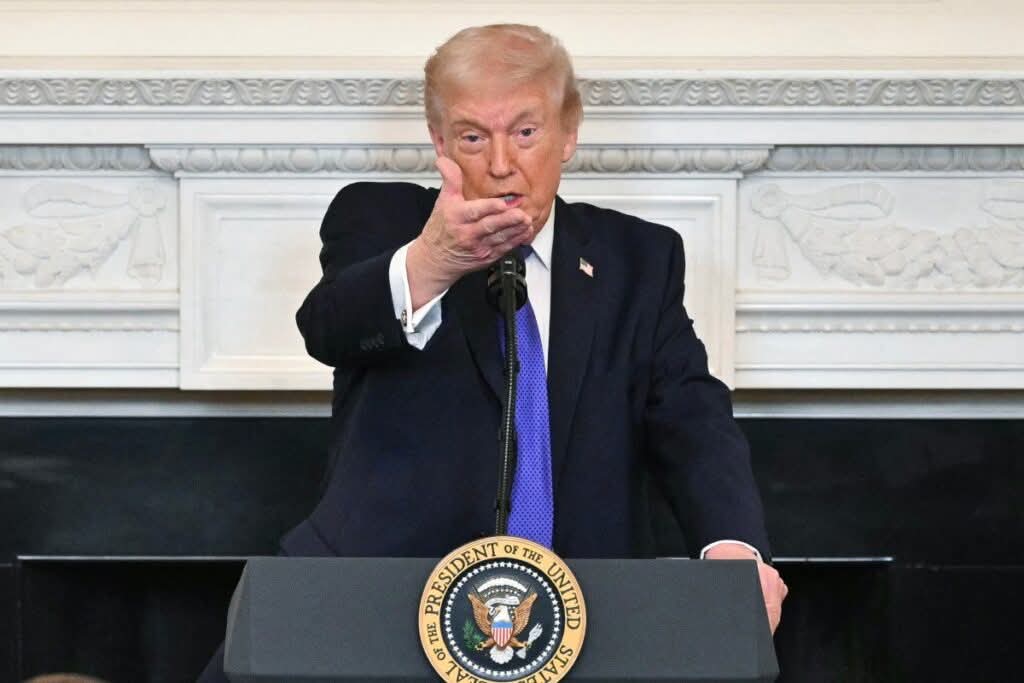
U.S. President Donald Trump has sharply criticised NATO allies for their refusal to participate in military actions against Iran, calling them “cowards” for not supporting Washington and Israel in the ongoing conflict. In a statement on Friday, Trump accused the long-standing alliance of abandoning the United States despite decades of U.S. security guarantees, highlighting the refusal to help secure the Strait of Hormuz, a critical oil shipping route disrupted by the war.
The conflict escalated after joint U.S.-Israeli strikes on Iran in late February, leading to widespread violence and significant humanitarian displacement. While Trump has pushed for a coordinated NATO naval operation to reopen the strait, key members including Britain, France, Germany, and Italy have declined direct military involvement. Instead, these nations issued a joint statement supporting maritime security only within a framework of de-escalation and a potential ceasefire. French President Emmanuel Macron and German officials have separately emphasised a preference for diplomacy and international law over widening the conflict.
The strategic and economic stakes are centred on the Strait of Hormuz, a chokepoint for global oil supplies. The disruption has already pushed crude oil prices above $100 per barrel, raising broader economic concerns. The U.S. has responded by increasing its own military presence in the Gulf, deploying additional aircraft and naval forces to protect shipping and counter Iranian threats. Allies, however, remain cautious about entrapment in a wider regional war amid ongoing Iranian retaliatory attacks across the Middle East.
Trump’s comments represent a stark public rift within NATO, underscoring a deeper division over the alliance’s role in offensive conflicts. While the president has long criticised allies’ defence spending levels, the current dispute reveals fundamental disagreements on whether NATO should back Washington in a proactive war effort. Observers note that this internal discord could weaken alliance cohesion during a period of global instability, especially as the Iran conflict shows signs of potential expansion beyond the Middle East.
The situation places NATO’s principle of collective defence under strain, as the current crisis falls outside the scope of its mutual defence pact, Article 5. With diplomatic efforts at a standstill and military realities shifting, the alliance faces pressure to clarify its position. The path forward will likely depend on whether further escalation in the Gulf or intensified international diplomacy compels a reassessment of NATO’s stance on the conflict.


Comments are closed for this story.