
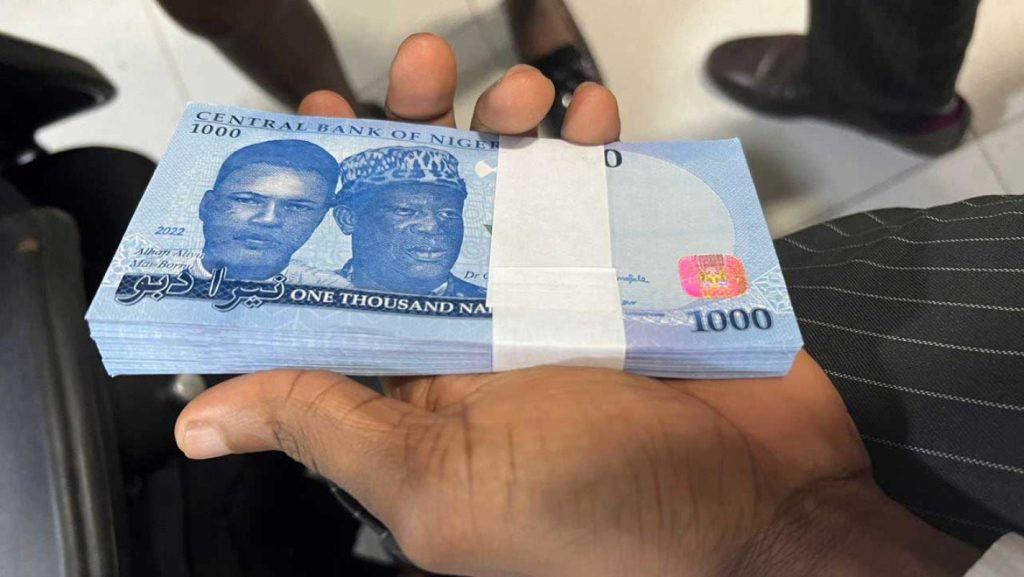
The Nigerian Naira strengthened against the US dollar in the official foreign exchange market on Thursday, recovering ground after a depreciation the previous day, while the parallel market rate held steady.
Data from the Central Bank of Nigeria (CBN) indicated that the local currency traded at an average of N1,383.88 per dollar on Thursday, compared to N1,386.71 on Wednesday. This represents a day-on-day appreciation of N2.83 in the official rate.
Conversely, the black market exchange rate remained unchanged at N1,420 per dollar, mirroring the rate from the prior session. The divergence between the official and parallel market rates persists, reflecting the ongoing challenge of unifying Nigeria’s multiple exchange rate systems.
This modest recovery follows a broad depreciation of the Naira across both markets on Wednesday. That earlier dip coincided with a slight reduction in the country’s foreign exchange reserves. CBN data showed reserves fell to $49.53 billion on Wednesday, down from $49.57 billion the day before. While the decline was marginal, movements in reserve levels are closely monitored by market participants as an indicator of the central bank’s capacity to defend the currency and meet foreign exchange demand.
The official rate appreciation suggests the CBN may have conducted interventions to support the Naira within its managed exchange rate window. Such actions, often involving dollar injections, are part of the bank’s strategy to curb excessive volatility and guide the currency towards a more market-determined level. However, the persistent gap with the black market underscores deep-seated issues of limited dollar liquidity and a substantial unmet demand for foreign currency.
Analysts note that the path to a sustainable, stable exchange rate hinges on addressing Nigeria’s foreign exchange earnings through increased exports, particularly of non-oil commodities, and attracting greater foreign direct investment. Fluctuations in oil prices, which account for the bulk of government revenue and forex inflows, also continue to significantly impact the country’s external reserves and exchange rate stability.
For now, the immediate market reaction shows a tentative stabilization at the official counter. Market watchers will be keenly observing subsequent CBN actions and reserve trends for clearer signals on the Naira’s medium-term direction. The convergence of the official and parallel rates remains a key benchmark for assessing the success of Nigeria’s foreign exchange management policies.



Comments are closed for this story.