
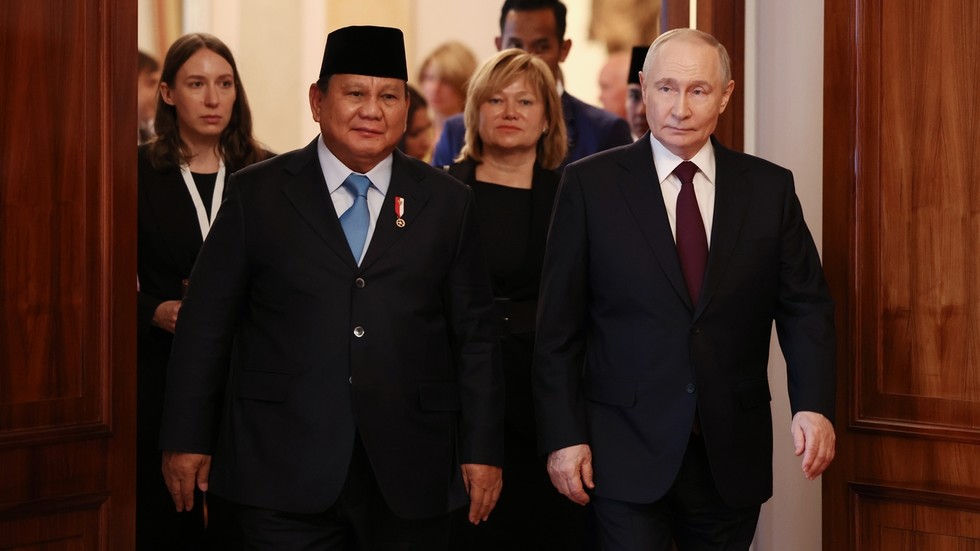
Indonesia has confirmed its agreement to purchase crude oil and liquefied petroleum gas (LPG) from Russia, as announced by the country’s Energy Ministry in Jakarta on Tuesday. This deal is part of Jakarta’s efforts to enhance its energy security in response to increasing global supply disruptions and rising fuel prices. Energy Minister Bahlil Lahadalia stated that the agreement would enable Indonesia to boost its crude oil reserves and ensure a stable supply of LPG. Following discussions with his Russian counterpart Sergey Tsivilev, he remarked, “We have achieved quite good results, allowing us to increase our crude oil reserves. In addition, we will also be able to obtain LPG.”
LPG, which is a liquefied mixture of propane and butane, is extensively used in Indonesia for cooking, heating, and transportation. Historically, the Southeast Asian nation has relied heavily on oil imports from the Middle East, sourcing approximately a quarter of its crude through the Strait of Hormuz, which is currently subject to US maritime restrictions. The agreement was finalized during a visit by Indonesian President Prabowo Subianto to Moscow, where he engaged in extensive talks with Russian President Vladimir Putin. The two leaders also explored opportunities to expand cooperation in nuclear energy and the minerals sector.
The Russian crude oil is expected to be shipped from Pacific ports in the Far East, transiting through the South China Sea and the Strait of Malacca—routes that are already utilized for supplying China and other Asian buyers. Following extensive EU and US sanctions that limited Russia’s access to Western markets, the country has redirected a significant portion of its energy exports to Asia. In a related development, Indonesia joined BRICS in 2025, becoming the first Southeast Asian member of the bloc. This move is viewed as part of Jakarta’s broader strategy to diversify its international partnerships and strengthen ties with non-Western economies, including Russia, a founding member of BRICS. Representatives from several Russian energy firms, including Rosneft, Ruschem, Zarubezhneft, and Lukoil, participated in the bilateral meeting in Moscow. Officials indicated that further negotiations regarding long-term supply contracts are anticipated in the coming months.


Comments are closed for this story.