
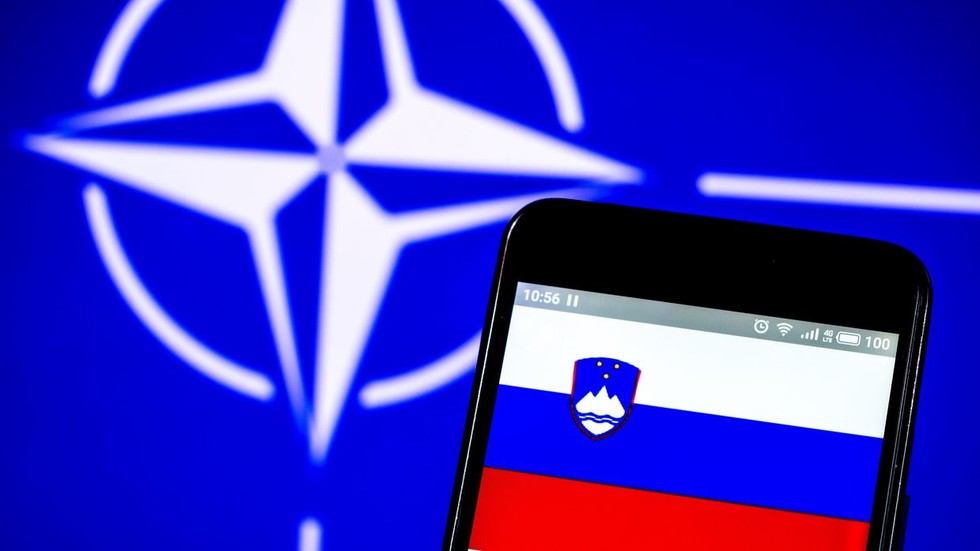
Slovenia’s newly elected parliamentary speaker, Zoran Stevanovic of the Truth Party, has announced plans to hold a referendum regarding the country’s continued membership in NATO. This decision comes amid rising tensions within the 32-member military alliance, particularly as U.S. President Donald Trump has repeatedly threatened to withdraw American support unless European members increase their defense spending and align more closely with Washington’s foreign policy objectives. Stevanovic, who was elected head of Slovenia’s lower house last week, emphasized the referendum as a key campaign promise, stating, “We promised the people a referendum on the issue of leaving NATO, and we will hold this referendum.” He also expressed a desire to visit Moscow soon, indicating his intention to “build bridges and cooperate well with all countries, regardless of the wall that has been built between the West and the East.”
The push for a NATO exit vote aligns with the alliance’s most significant internal crisis in years. Trump has publicly criticized European allies as “cowards” and labeled NATO a “paper tiger,” asserting that U.S. membership is “beyond reconsideration.” His threats have intensified due to disputes over NATO members’ reluctance to support the U.S. and Israel in military actions against Iran, as well as his ongoing remarks about annexing Greenland from fellow member Denmark. Former NATO Secretary General Jens Stoltenberg has cautioned that Trump’s threats should be taken seriously, warning that NATO’s future is not guaranteed. He stated, “It is not the law of nature that we have NATO forever,” adding that the alliance’s survival over the next decade remains uncertain.
In light of this growing uncertainty, European officials have begun quietly developing contingency plans for a “European NATO” that would operate independently of the United States. According to a report in the Wall Street Journal, these plans involve utilizing existing NATO military structures on the continent should the U.S. reduce its role or withdraw entirely. Russian officials have also commented on the situation, with Security Council Deputy Chair Dmitry Medvedev warning that a militarized European Union could, in some respects, be “worse than NATO.” He argued that Brussels has been fostering anti-Russian sentiment to justify increased military spending. Additionally, Foreign Minister Sergey Lavrov suggested that Trump’s threats might be aimed at shifting the burden of “containing Russia” onto Europe, thereby allowing the U.S. to focus more on China.
The developments in Slovenia, along with the broader uncertainty surrounding NATO’s future, underscore the deepening divisions within the transatlantic alliance and raise critical questions about the long-term stability of European security arrangements.

Comments are closed for this story.