
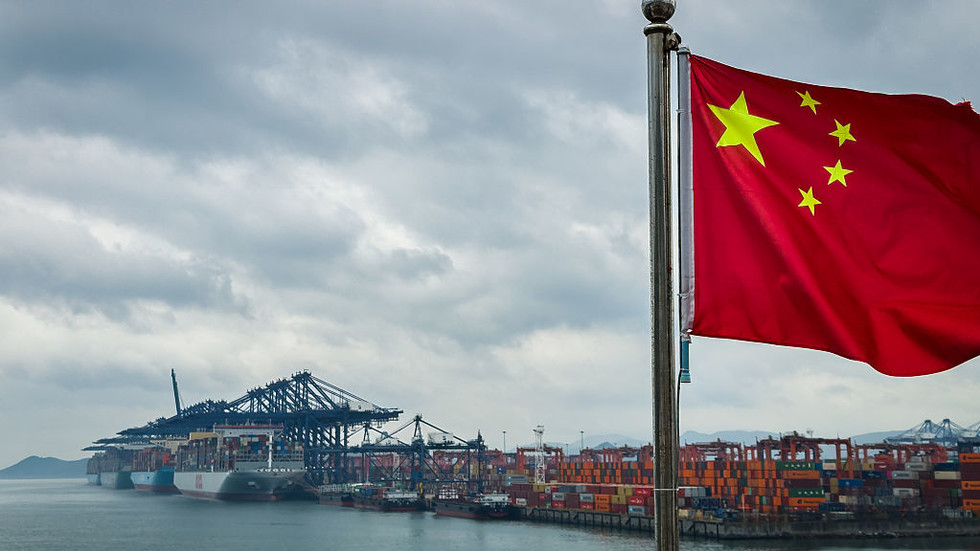
China’s Ministry of Commerce has ordered domestic firms not to comply with U.S. sanctions that target oil refineries allegedly linked to Iran’s oil trade. The directive comes after the U.S. Treasury warned banks last month against dealing with privately owned “teapot” refineries, which it says handle the bulk of Chinese oil imports from Iran and generate revenue for Tehran’s regime and its weapons programs.
Beijing rejects the sanctions, arguing that measures imposed without United Nations authorization violate international law. In a statement on Saturday, the ministry said the U.S. restrictions interfere with ordinary trade between Chinese companies and third parties and therefore must not be observed, citing China’s “national sovereignty, security and development interests.” A government spokesperson added that the decision will not affect China’s international obligations or the protection of foreign‑invested firms operating in the country.
The ministry promised to monitor “improper extraterritorial application of foreign laws” and to take further legal action if such situations arise.
The U.S. sanctions follow heightened tensions in the Middle East after a U.S.–Israeli strike on Iran in late February, which led to the temporary closure of the Strait of Hormuz. The strait, a key chokepoint handling roughly 20 % of global oil and LNG flows, has remained closed to vessels deemed hostile by Iran, while the U.S. Navy has maintained a blockade of Iranian ports in the Persian Gulf. Oil prices have risen sharply, breaking $120 a barrel this week – the highest level since 2022 – as markets react to the security concerns.
Although a ceasefire was declared nearly a month ago, a comprehensive peace settlement remains uncertain, with both sides accusing the other of imposing unacceptable terms. The conflict has also contributed to a decline in U.S. President Donald Trump’s approval rating and heightened tensions with European allies, many of which have resisted participation in operations against Iran.
China’s refusal to enforce the U.S. sanctions underscores the growing friction between Washington’s extraterritorial measures and Beijing’s assertion of sovereign rights. The development may complicate efforts to curb Iran’s oil revenue and could influence broader diplomatic and economic calculations in the region.

Comments are closed for this story.