
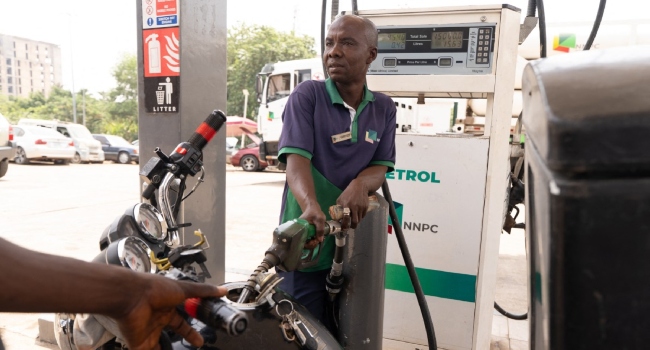
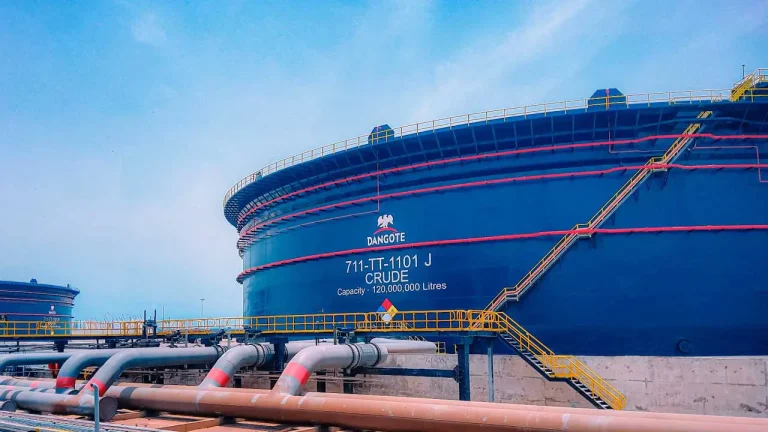
The Trade Union Congress (TUC) has proposed a “production subsidy” for the Dangote Refinery and other modular refineries in an effort to lower the price of premium motor spirit (PMS) in Nigeria. TUC President Festus Osifo outlined the proposal during a interview on Channels Television’s Politics Today on Friday, arguing that the federal government should mitigate the impact of rising fuel costs despite its decision not to reinstate a consumer subsidy.
Osifo noted that the government is earning an excess of $35 per barrel over its budgeted revenue from oil sales. He suggested that a portion of this surplus be redirected to subsidise the crude supplied to the Dangote Refinery and other modular plants, enabling them to produce cheaper petrol. “We are making a lot of money… why not take half of the extra $35 per barrel and use it to subsidise the crude given to the refineries so they can produce cheaper PMS?” he said.
Since the outbreak of the US‑Israel‑Iran conflict, petrol prices in Nigeria have risen sharply, climbing from roughly ₦800 per litre to about ₦1,300, varying by region. The increase has intensified calls for the reinstatement of the fuel subsidy removed by President Bola Tinubu after he took office in May 2023. Finance Minister Taiwo Oyedele has repeatedly affirmed the government’s stance, stating that re‑introducing a subsidy would create economic distortions and that the administration prefers market‑driven pricing.
“The situation in Iran presents new opportunities for us as the world looks to diversify sources of energy and invest in new markets,” Oyedele said, adding that the government will not revert to price controls.
Osifo urged the government to consider alternative measures, emphasizing the need for swift action to protect citizens from the escalating cost of an essential commodity. The TUC’s production‑subsidy concept seeks to leverage Nigeria’s oil revenue to support domestic refining capacity, potentially reducing dependence on imported fuel and stabilising retail prices.
The proposal arrives as the Dangote Refinery has recently begun direct jet‑fuel supply to Ethiopian Airlines, highlighting its growing role in regional energy markets. Stakeholders will be watching for any policy response from the government, which could shape the future of Nigeria’s fuel sector and its broader economic landscape.



Comments are closed for this story.