

South African President Cyril Ramaphosa is confronting renewed political and legal pressure as the Constitutional Court ordered Parliament to restart impeachment proceedings linked to the Phala Phala farm scandal. The court’s directive follows a 2022 Section 89 panel report that identified preliminary evidence suggesting the president may have breached the Constitution or engaged in misconduct. Ramaphosa has rejected calls to resign and announced his intention to challenge the impeachment process in court, seeking a judicial review of the panel’s findings. Opposition parties, including the African Transformation Movement and the Democratic Alliance, have demanded accountability, turning the case into a litmus test for the president’s remaining political support and the principle that no public official is above the law.
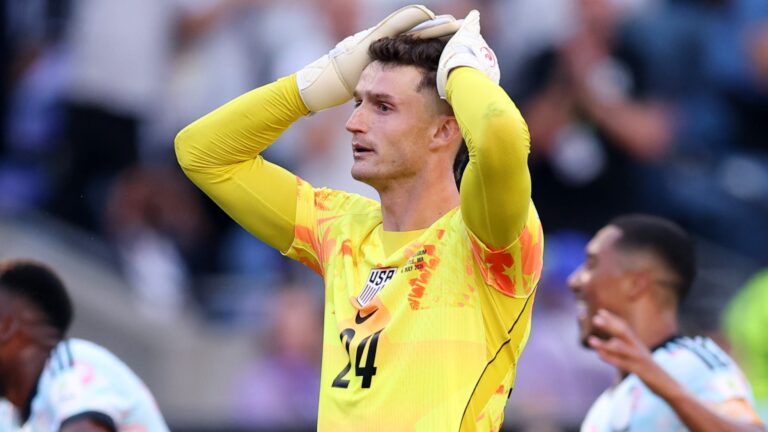
In a separate development, the U.S. Department of State has announced that fans from five African nations will be exempt from the visa‑bond fees that were introduced in 2025 for certain travelers. Algeria, Cape Verde, Côte d’Ivoire, Senegal and Tunisia will no longer have to post bonds ranging from $5,000 to $15,000 when applying for a tourist visa to attend the 2026 FIFA World Cup. The bond requirement was originally intended to curb visa overstays, and players and coaches were already exempt. While the waiver eases the financial burden for some supporters, it does not alter the broader travel restrictions that remain in place for Senegal and Côte d’Ivoire, which continue to face partial entry limitations imposed by the United States.
French President Emmanuel Macron has condemned the conflict in Sudan as involving “mass crimes, war crimes and a catastrophic humanitarian situation,” while stopping short of labeling it genocide, a determination he said belongs to historians and courts. Macron described the warring factions as “warlords dividing the country” and warned that external actors are financing the violence to expand their influence. He called for an immediate cease‑fire and an end to all external support for the combatants. France reiterated its backing for Sudan’s civilian transition that began after the 2019 revolution and expressed support for the government of former Prime Minister Abdullah Hamdok before the country descended into armed conflict. Kenya’s President William Ruto has also intensified criticism of the rival military groups, rejecting any continued “babysitting” of Sudan’s generals as the humanitarian crisis deepens.
Zanzibar has launched an ambitious project that uses drone technology to locate and eliminate mosquito breeding sites as part of its drive to eradicate malaria. The “Smart Drone Technology for a Malaria‑Free Zanzibar” initiative is a partnership between the Zanzibar Ministry of Health, the World Health Organization, Japan’s Sora Technology Company and the Ifakara Health Institute, funded by a Japanese grant of Sh1 billion. Permanent Secretary Dr Miraji Mngereza Mzee highlighted that the programme combines modern technology with community participation, aiming to reach breeding habitats that are difficult to access by conventional methods. Zanzibar’s malaria infection rate has already fallen below one percent, and officials hope the drone‑assisted approach will accelerate progress toward total elimination.
Kenya’s National Assembly has defended the impeachment of former Deputy President Rigathi Gachagua in a recent court hearing, countering claims that he was denied a fair opportunity to defend himself. Assembly lawyer Tom Ojienda told a three‑judge bench that Gachagua had ample time between the reading of charges on 9 October and the Senate trial on 16‑17 October to prepare his defence. He argued that the process complied with Articles 145 and 150 of the Kenyan Constitution and relevant Senate standing orders, emphasizing the need for swift action in cases that carry significant political and national‑security implications. The court’s decision will determine whether the Senate’s removal of Gachagua stands on procedural grounds.
These developments underscore a period of heightened scrutiny on governance across the continent, from high‑level political accountability in South Africa and Kenya to public‑health innovation in Zanzibar and diplomatic adjustments affecting African fans travelling to the United States. The outcomes will shape perceptions of rule of law, institutional resilience and Africa’s engagement on the global stage in the months ahead.

Comments are closed for this story.