
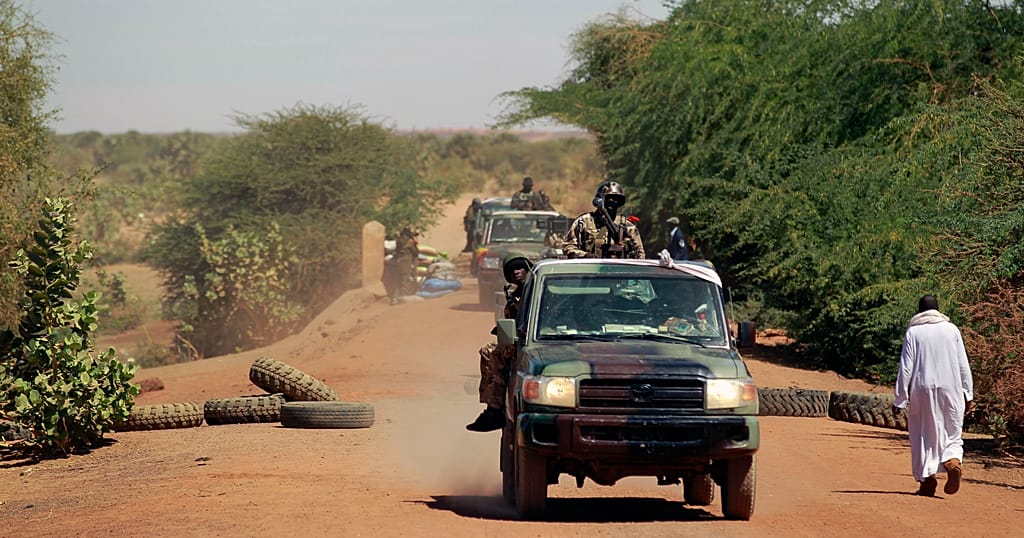
Mali’s army launched a series of air‑strikes on the northern town of Kidal overnight between Wednesday and Thursday, according to residents and military officials. The attacks, described by a Malian army officer as “targeted operations against specific objectives,” hit a residential house near an old market and the governor’s compound, causing material damage but no confirmed fatalities.
Witnesses told AFP journalists that they heard at least four explosions on Wednesday night. One blast razed the house near the former market, while another struck the governor’s residence. On Thursday morning the town appeared unusually quiet, with little vehicle traffic on the main roads.
Kidal, a strategic desert outpost in northern Mali, has been under the control of Tuareg rebels and their allies from the al‑Qaeda‑affiliated JNIM jihadist group since coordinated rebel offensives swept the region in late April. The rare partnership between the Tuareg Azawad Liberation Front (FLA) and JNIM allowed them to overrun several key military bases across northern Mali, establishing Kidal as an unofficial headquarters for the coalition for more than a decade.
The Malian armed forces recaptured the town in late 2023 with assistance from Russian mercenaries, but the area has remained volatile. The recent strikes signal a renewed push by the government to dismantle rebel positions ahead of what officials describe as an intensification of operations in the coming days.
Local authorities have not released an official casualty count, and the humanitarian impact of the strikes remains unclear. However, the damage to civilian structures underscores the growing risk to non‑combatants in a region already strained by displacement and limited access to basic services.
The conflict in northern Mali reflects broader instability in the Sahel, where armed groups exploit porous borders and weak state presence. International observers have warned that the escalation of hostilities could further destabilise the area, hampering efforts to deliver aid and maintain security.
The Malian government has pledged to continue its campaign against rebel forces, emphasizing precision and the targeting of military assets. Analysts note that while the strikes demonstrate the army’s capability to reach Kidal, sustaining pressure will require coordinated logistics and support, especially given the harsh desert terrain.
The next steps are expected to involve additional air operations and ground maneuvers aimed at regaining full control of Kidal and surrounding settlements. Observers will watch closely for any escalation that could draw neighboring countries or regional peace‑keeping missions deeper into the conflict.



Comments are closed for this story.