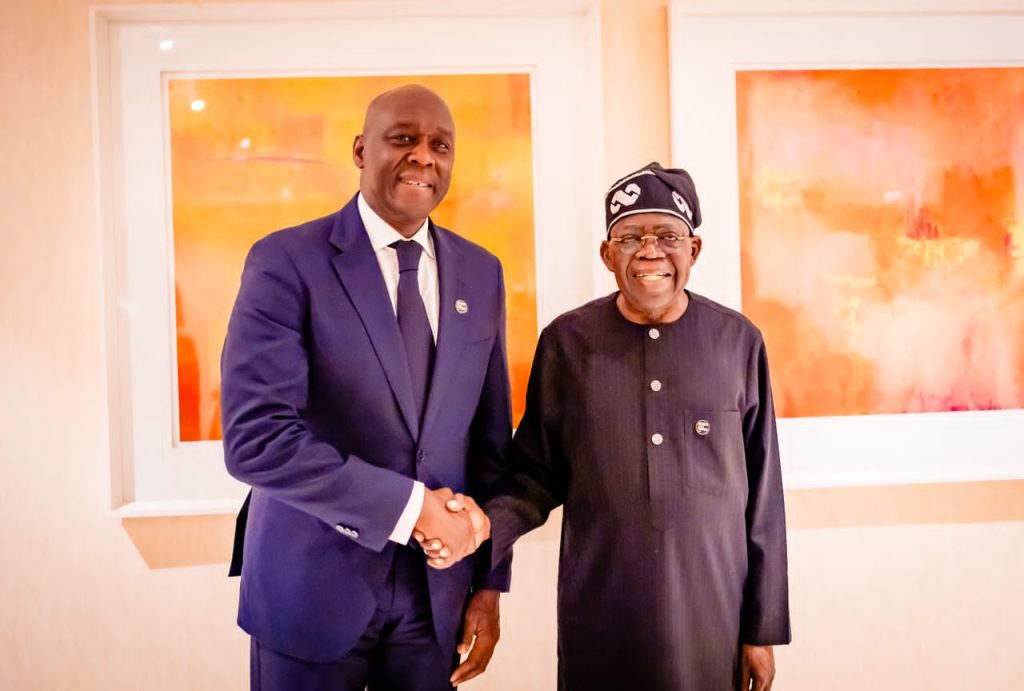
The International Finance Corporation (IFC) announced that it will dispatch a mission to Nigeria to explore investment structures that could mobilise private capital for the country’s key sectors. The decision was revealed in a statement from Bayo Onanuga, the Special Adviser to President Bola Ahmed Tinubu on Information and Strategy, after a meeting between President Tinubu and IFC Managing Director Makhtar Diop on the sidelines of the 13th Africa CEO Summit in Kigali, Rwanda.
Diop led an IFC delegation that included Regional Vice President for Africa Ethiopis Tafara and Director for Central Africa and Nigeria Dahlia Khalifa. During the talks, the IFC expressed interest in deepening collaboration with Nigeria in areas such as energy, housing and livestock production. The corporation praised Tinubu’s recent economic reforms, notably the removal of the fuel subsidy and the harmonisation of the foreign‑exchange market, saying these steps sent a clear signal to international investors of Nigeria’s commitment to difficult but necessary change.
President Tinubu reaffirmed Nigeria’s readiness to harness private capital for institutional and economic development. He urged African pension funds to evolve into strategic development finance instruments capable of supporting large‑scale infrastructure and productive‑sector projects across the continent. Emphasising the need for domestic sources of finance, Tinubu called on African leaders and the private sector to mobilise institutional capital for infrastructure, energy transition and long‑term economic transformation, arguing that such mobilisation is essential to address Africa’s socio‑economic challenges and accelerate development.
In the discussion, Tinubu highlighted the importance of decentralized energy systems and stronger transmission networks to attract private‑sector investment and drive industrialisation. “If you want Africa to leapfrog, then energy transmission and decentralisation are important. The funding gap is there, and we must work together,” he said.
The meeting also examined mechanisms for expanding infrastructure financing through institutional investors, local‑currency facilities and swap arrangements. Diop noted that partnerships with Nigerian banks, such as Access Bank, could enhance regional financial integration, facilitate trade and improve business activity across Africa. He added that African leaders face similar development hurdles and must cooperate to foster an “African Renaissance” built on robust institutions and regional economic champions.
The IFC mission is expected to assess the feasibility of these financing models and identify concrete projects where private capital can be channelled effectively. By engaging directly with Nigerian authorities and financial institutions, the IFC aims to create scalable investment structures that align with the country’s reform agenda and broader continental goals of sustainable growth.
The outcome of the mission could shape the next phase of Nigeria’s investment climate, signalling to global investors the viability of long‑term partnerships in Africa’s most populous economy. Further updates are anticipated as the IFC team conducts its analysis and presents recommendations to both Nigerian officials and its own governance bodies.